
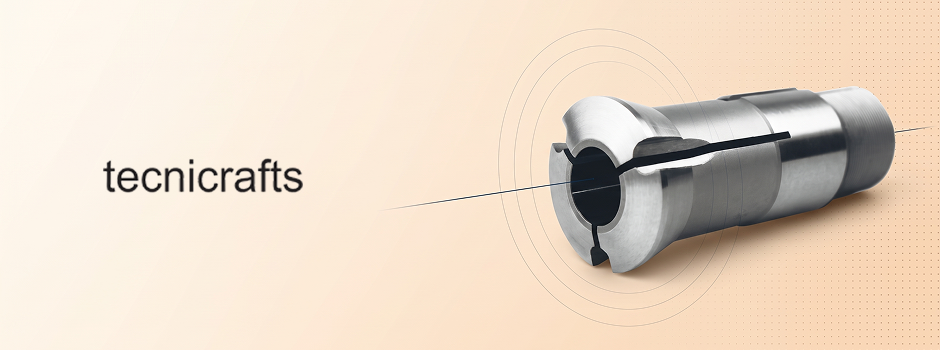
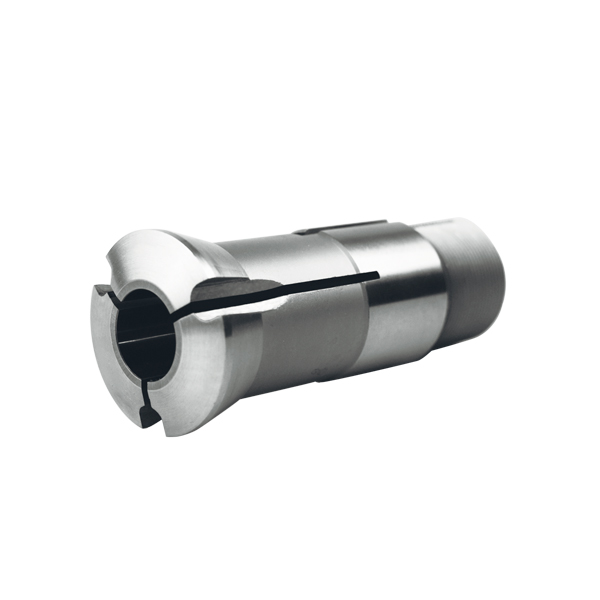
In a Swiss automatic machine, the rod goes to the cutter through a lunette collet — a guide sleeve. It supports the workpiece at the cutting area itself, so it depends on its hole how smoothly the rod runs. At Tecnicrafts, this hole is treated to a roughness of Ra 0.4 microns and has a chamfer on the edge. There is a carbide insert inside the collet: it wears out more slowly than steel, and the collet lasts longer.
|
First the machine, then the rod
The mounting dimensions of the lunette are different for each machine, so the collet is divided into series. The first number in the designation is the diameter of the guide: The R34/02 series has a diameter of 34 mm. One series usually fits several brands at once. For example, R34/02 is put on Citizen, Manurhin K'XX, Nexturn, Polygym, Tornos and Tsugami.
When the series is known, it remains to select the hole for the rod. In the smallest series, it starts from 1 mm, in the largest it reaches 43 mm for a circle.
When a standard collet is not enough
With a round bar, everything is simple: it doesn't matter to the collet how it turns. The hexagon is more difficult. If the faces are to enter the processing area in a given position, a collet with a groove is needed to orient the bar. In the catalog, these are marked with the prefix KEY, for example R34/02 HEX14,1 + KEY.
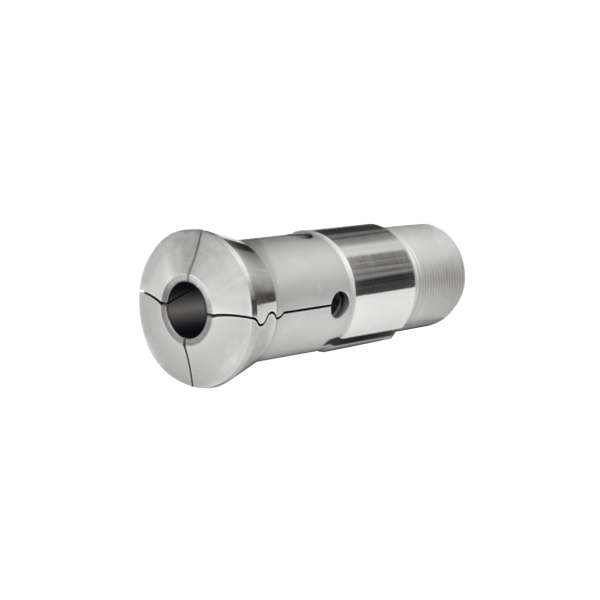
Another problem is the clamping marks on the surface of the workpiece and the chips that are driven into the collet. There is a U-line design for this: the slots are U-shaped, not straight. Such collets are made with increased precision, and they are suitable for bars of any profile — round, hexagonal, square.
|
Tecnicrafts Industries has been operating since 2002 and specializes in collet and guide bushings for Swiss automatic machines. Its equipment is used by manufacturers of watches, medical devices and miniature bearings, where the accuracy of small parts is important. At Enex, the lunette collet is sold by the manufacturer himself and the Moscow company YUMIK.