
What is an AVR
The AVR is a module that automatically switches the load between the main and backup power sources. Manufacturers offer both single‑phase and three-phase solutions; AVR is often already included in the basic package of diesel or gasoline generators. To implement the switching function, it is enough to install a special switch after the electric meter-its contacts are controlled by the main power source.
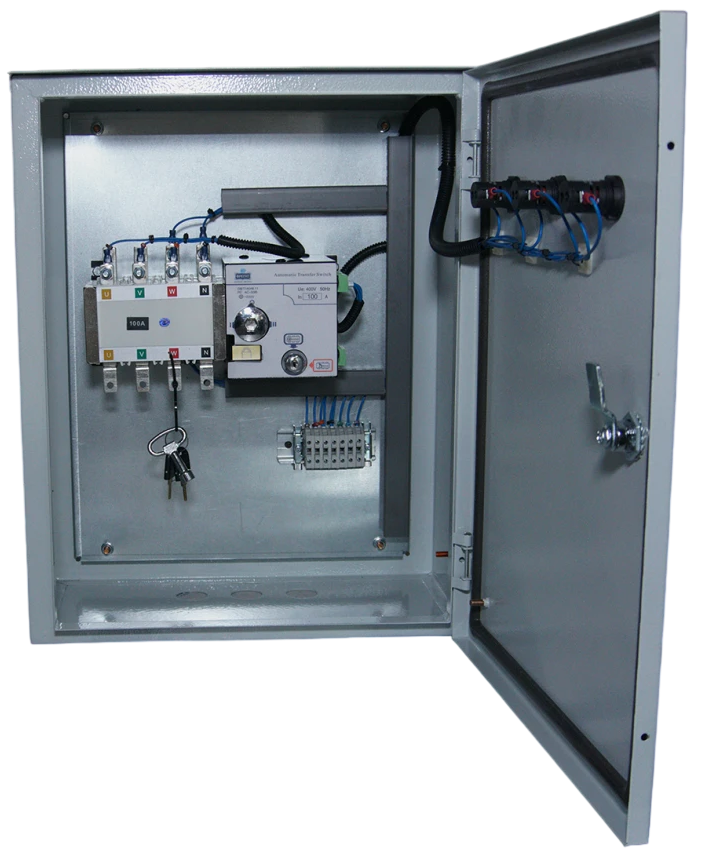
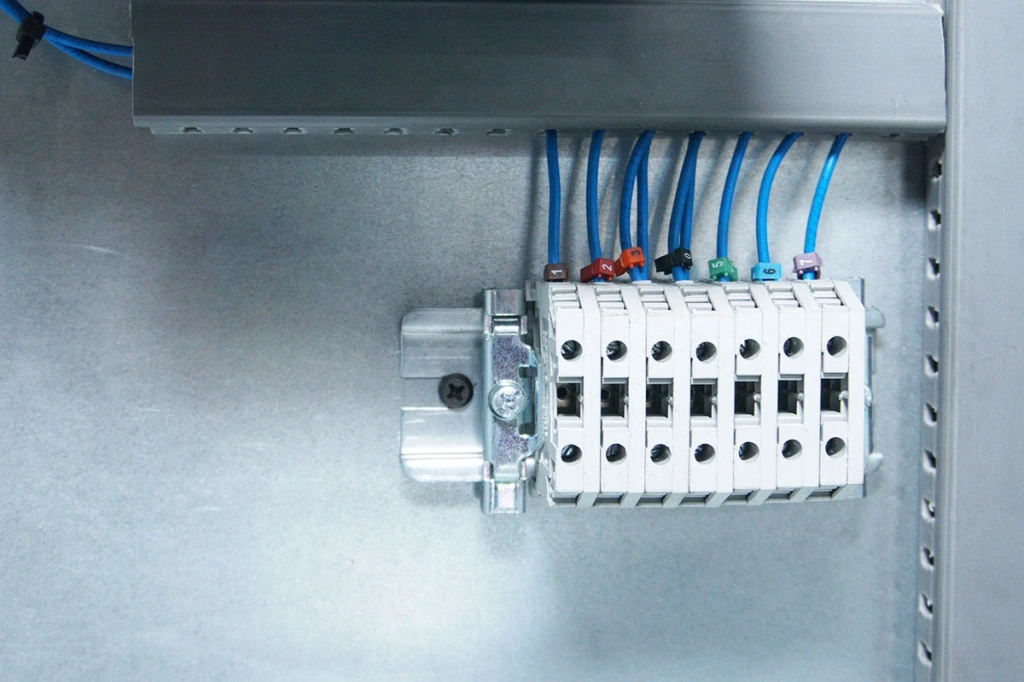
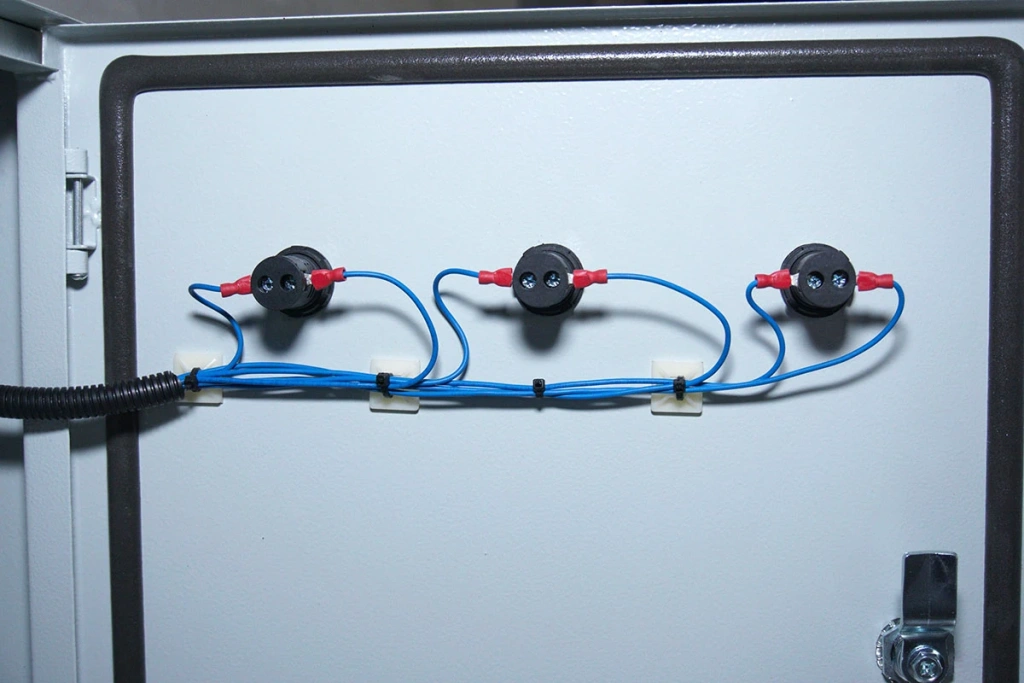
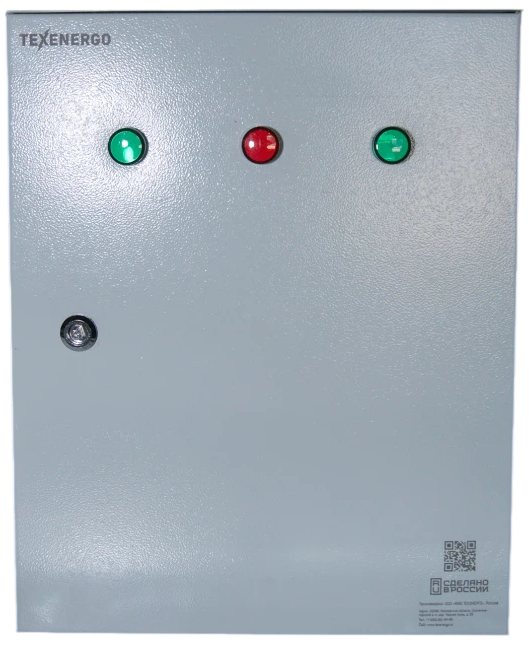
AVR modules can be integrated into most generators with an electric starter (starting from a battery). AVR cabinets are used to accommodate the equipment: they are installed either next to the generator or as part of the main electrical panel.
|
|
|
|
The main function of the ATS is to start the power plant in case of a failure in the centralized network and connect the load to it. When the power supply is restored, the system automatically transfers consumers back to the main line.
AVR classification and capabilities
ATS devices are distinguished by a number of parameters:
- the number of backup sections;
- voltage class;
- network type (single-phase or three-phase);
- permissible load;
- switching delay time.
An important advantage of modern AVR systems is the ability to flexibly distribute the load. The circuit can be configured so that in case of an accident, power is supplied only to critical lines. For example, current is primarily supplied to circuits that operate life support systems, servers, or refrigeration equipment. This approach allows you to competently manage energy consumption in conditions of limited reserve.
Device and operating principle
The AVR includes three key modules:
- switching elements (contactors, switches) for connecting input and load circuits;
- logical devices and indicators for monitoring the system status;
- relay blocks that control the operation of the generator.
To increase reliability, additional components can be added to the circuit, such as inverters. They stabilize the voltage, reduce switching delays, and improve the quality of the output current.
The input voltage is monitored by a phase control relay. In normal operation, contactors supply power from the main network to consumer lines. If the mains voltage drops below the permissible threshold, the relay solenoid stops holding the contacts in the closed state-the load is disconnected from the main line.
If there is an inverter in the circuit, it immediately begins to generate alternating current (220 V), providing consumers with high-quality voltage even in the complete absence of mains power. If the network parameters are not restored within the specified time, the system gives a signal to start the generator. After the station goes into operation, the load switches to the backup line.
When the power supply from the main grid returns to normal, the ATS automatically transfers consumers back, disconnects the backup circuit and stops the generator (including stopping the fuel supply).
Operating modes and safety
The AVR system supports three operating modes:
- manual-usually used during commissioning and maintenance;
- automatic is the main mode in which all operations are performed without operator involvement.
- Semi-automatic is an intermediate option with partial user control.
On the control panel, you can manually switch lines and adjust the controller settings.
The safety of the system is ensured by protective elements: relays and blockers that prevent the occurrence of oncoming currents and short circuits. These components are not always shown in simplified diagrams, but they are essential for reliable operation of the AVR.
Thus, the introduction of AVR into the backup power supply scheme makes it possible to minimize equipment downtime, avoid emergencies, and ensure stable power supply to critical loads even in the event of serious failures in the centralized network.
AVR connection schemes: implementation options and features
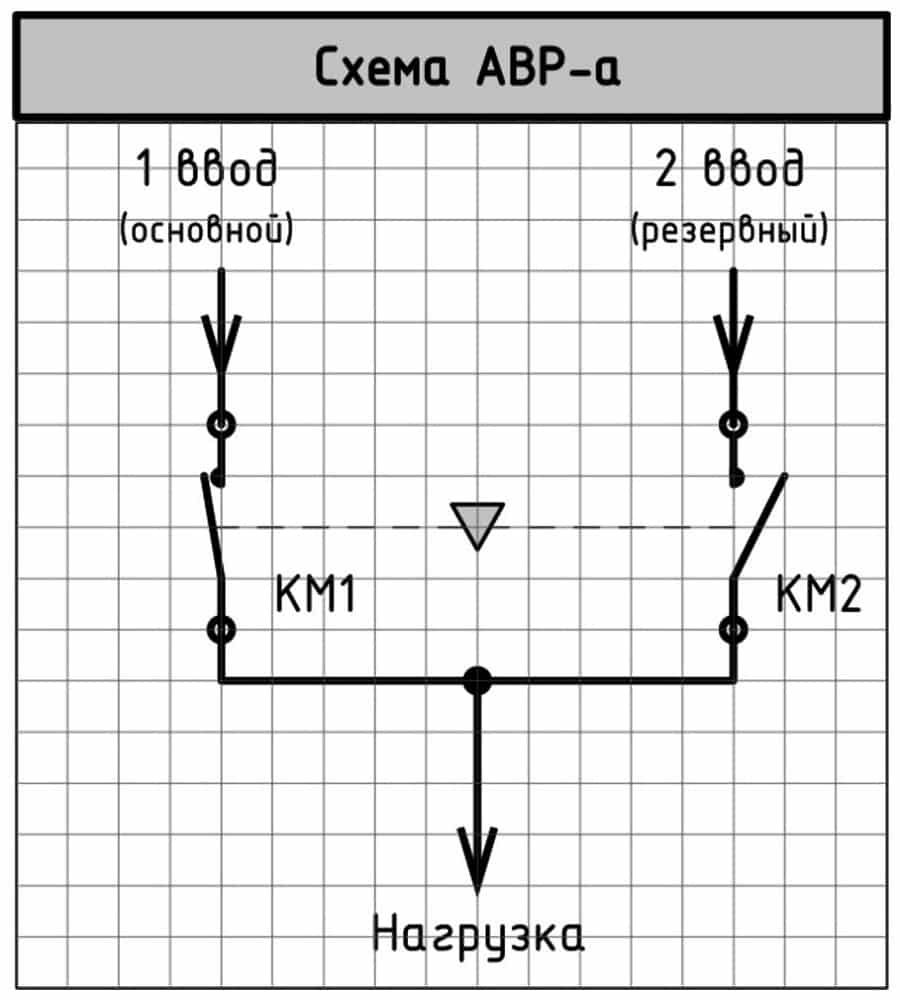
The main function of the AVR is to automatically switch inputs, preventing the appearance of oncoming currents that can disable equipment or provoke an emergency situation .
The figure shows a typical switching scheme: contacts KM1 and KM2 are interconnected in such a way that when one of them is opened, the second one necessarily closes. The design eliminates simultaneous closing of both contacts-this is a basic measure of protection against oncoming activation.
|
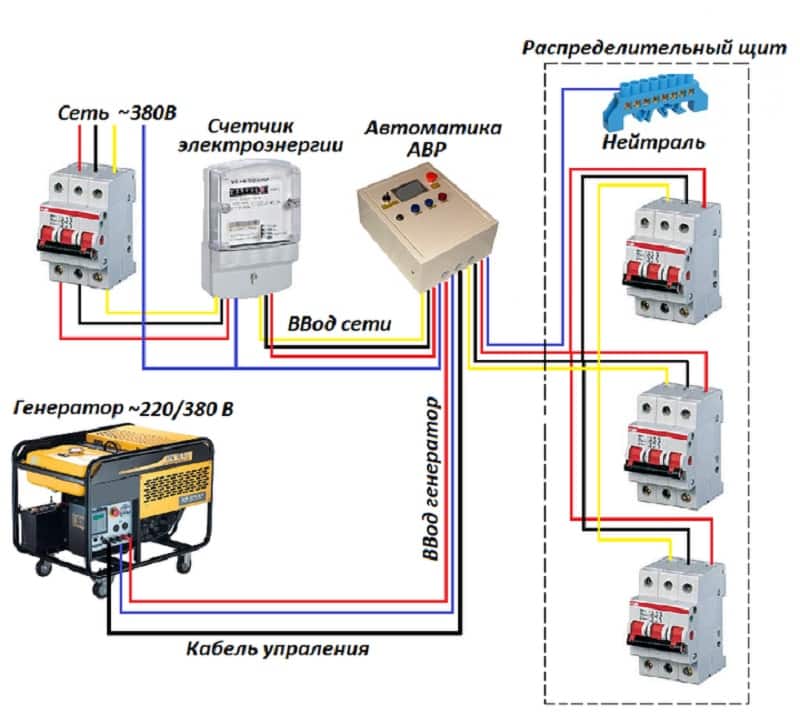
There are many options for automatic reserve entry schemes, but they all have a common principle of placement.: The AVR is installed between the input line and the consumers, most often after the electric meter. The location of the automation panel can be any, the main thing is to follow this connection sequence. A visual representation of this solution is shown in the figure below.
|
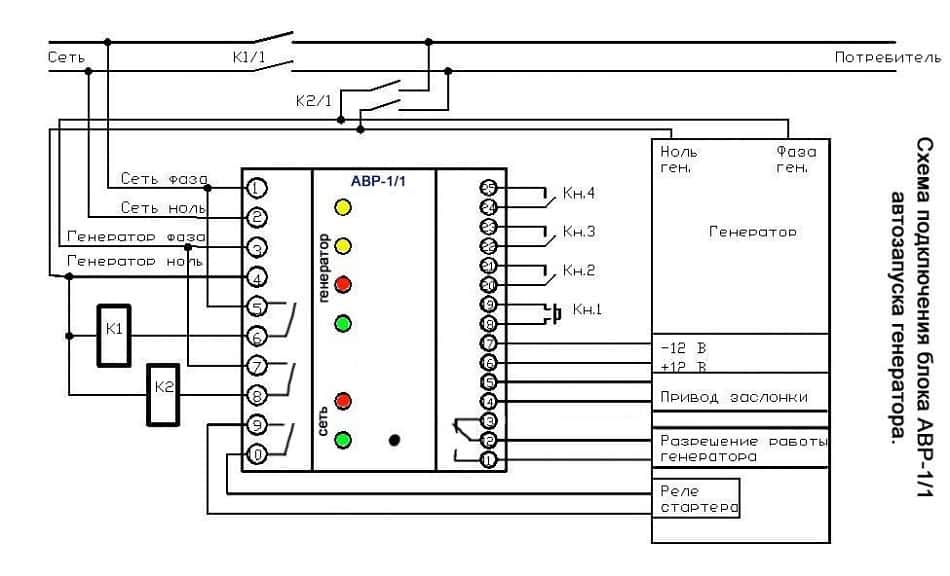
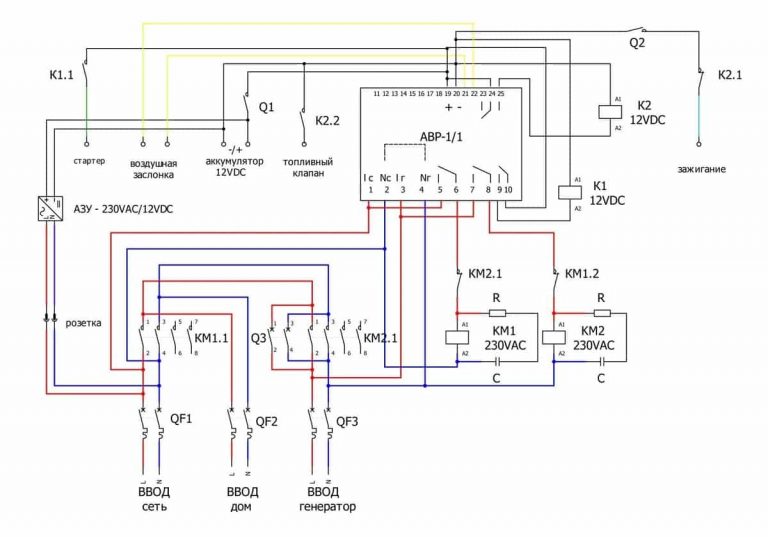
Next, we will look at the detailed connection diagram of the autorun generator module. Contactors K1 and K2 are marked on it, and the numbers in the circles correspond to the terminal numbers-this simplifies installation and reduces the risk of assembly errors.
|
For the power supply of a private house, a separate circuit is used, which additionally uses an automatic charger. It helps to maintain a stable voltage and ensures continuity of power supply, including due to the correct operation of the battery circuits .
|
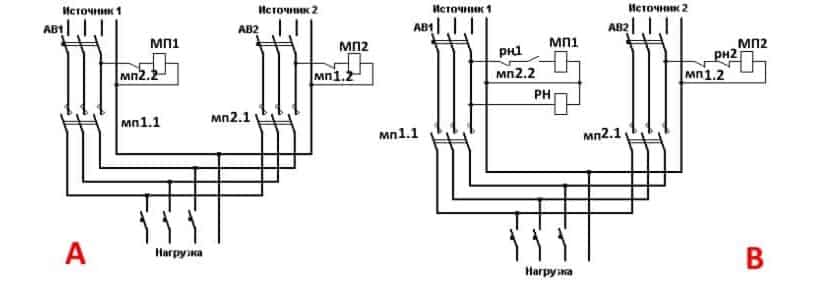
Solutions for three-phase networks are of particular interest - they are shown in the figure below. There are two options here:
- Scheme A (two-section design)-both sections have equal priority. This allows you to switch lines regardless of whether there is a voltage in each of them.
- Circuit B (single-section version with additional relay)-the generator is automatically started immediately after the mains voltage drops.
|
The choice of a specific circuit is completely determined by the tasks that the backup power supply system must solve.
If the generator is equipped with an electric starter, the automation of the reserve input can be implemented independently. To do this, you need to:
- Select a circuit that matches the parameters of the home electrical network (voltage, phase ratio, rated load).
- Purchase components taking into account the total capacity of the connected consumers and the required current reserve.
- Perform the installation according to the selected scheme, strictly observing the rules of electrical safety.
Self-assembly of AVR is possible if you have specialized knowledge and skills of working with electrical equipment. In all other cases, it is recommended to involve qualified specialists to ensure the reliability and security of the system.