
In this article, we will highlight five key criteria that you need to pay attention to when choosing a pneumatic angle grinder to equip your workshop. These parameters are more important than the color of the case or the presence of the case.
Criterion 1: power and air consumption (l/min or CFM)
This is the most important parameter that determines the compatibility of the tool with your compressor and its performance.
- What to watch: in the instrument data sheet, look for Air consumption. It is indicated in liters per minute (l/min) or cubic feet per minute (CFM: 1 CFM ≈ 28.3 l/min) at a certain pressure (usually 6.3 bar).
- Why this is important:
- Power: High air consumption is usually correlated with high power and torque. Such a USB key will not "give up" when pressing hard on the disk.
- Compressor selection: the performance of your compressor should be at least 1.5 times higher than the rated flow rate of USM. For example, if the Bulgarian consumes 450 liters/min, a compressor with a capacity of at least 650-700 liters/min is needed. Otherwise, the pressure in the system will drop, the tool will lose momentum, and the compressor will run without stopping.
- Range: for professional tasks (stripping welds, working with metal), look for models with a flow rate from 350 to 600+ liters/min.
Criterion 2: maximum rotation speed (rpm)
This parameter determines which types of work and tooling the tool is suitable for.
- What to watch: maximum idle speed (RPM - revolutions per minute).
- Why this is important:
- Disc compatibility: Each abrasive or cutting disc has the maximum allowable working speed indicated on the label. The RPM of your UHF should NEVER exceed this speed! Using a disk at high speeds is deadly due to the risk of tearing it.
- Type of work: high revs (12 000 - 15 000 rpm) are better suited for cutting metal with thin discs. Average revolutions (6 000 - 10 000 rpm) are optimal for stripping with petal wheels or grinding.
- Practice: the universal choice for the workshop are models with revolutions in the area of 8 000 - 12 000 rpm
Criterion 3: disc diameter (fitting size) and spindle size
This criterion determines the size of the tool and its capabilities.
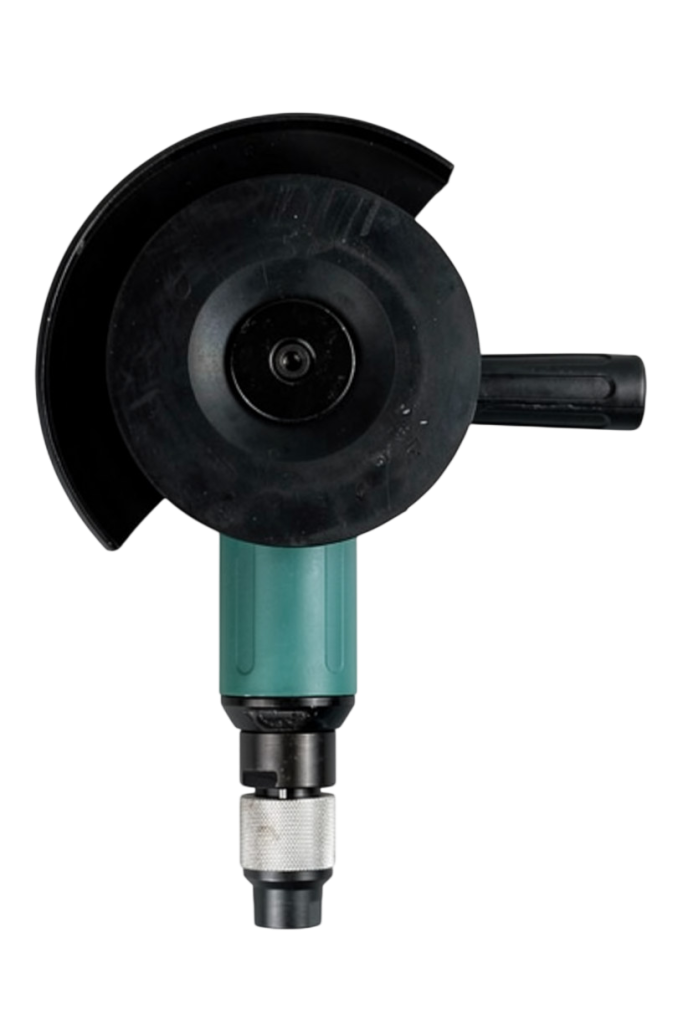
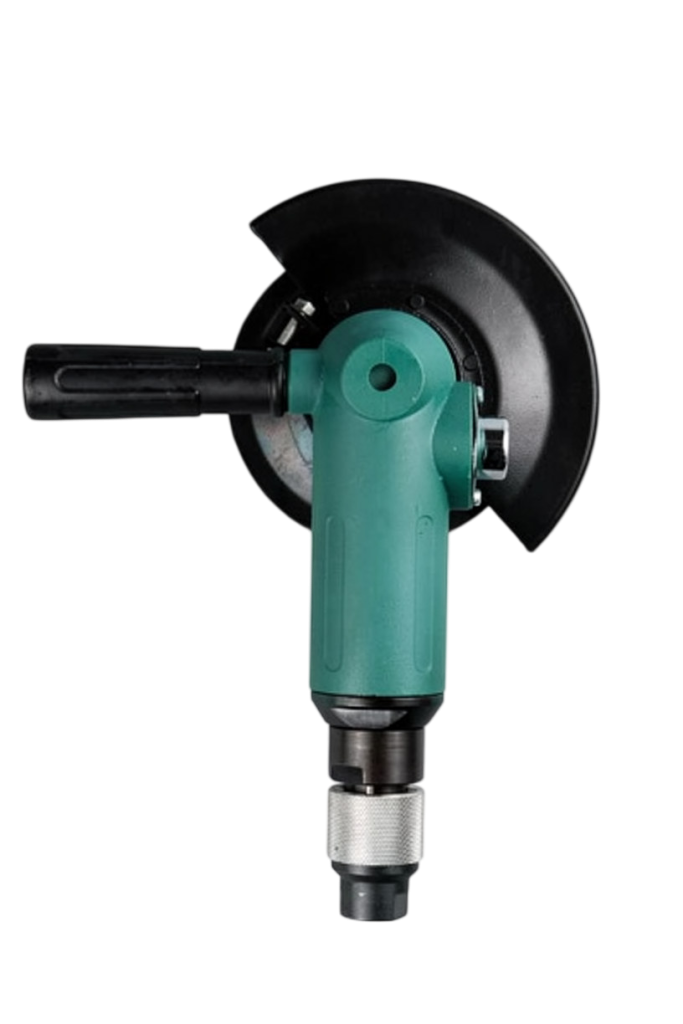
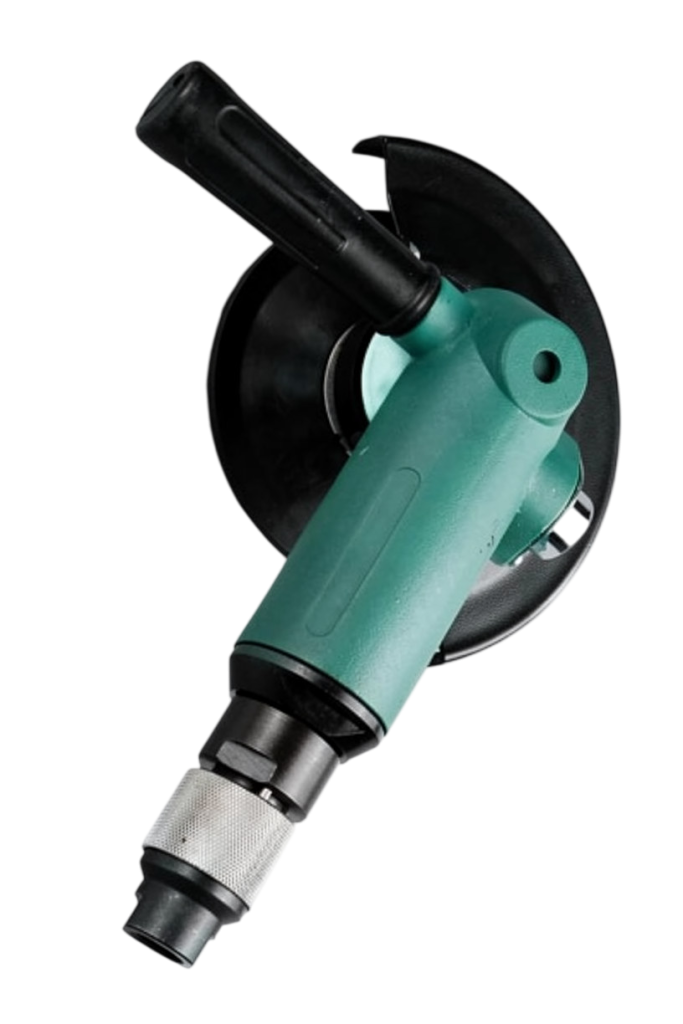
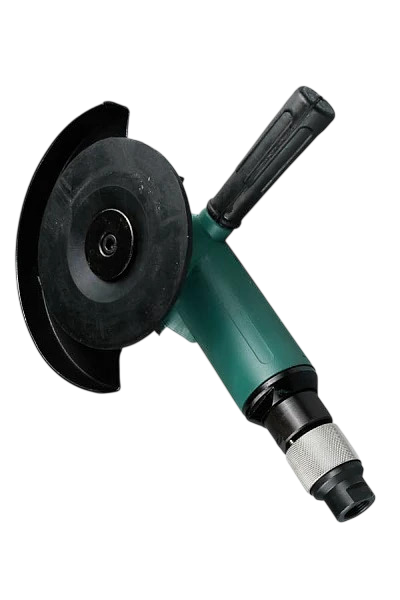
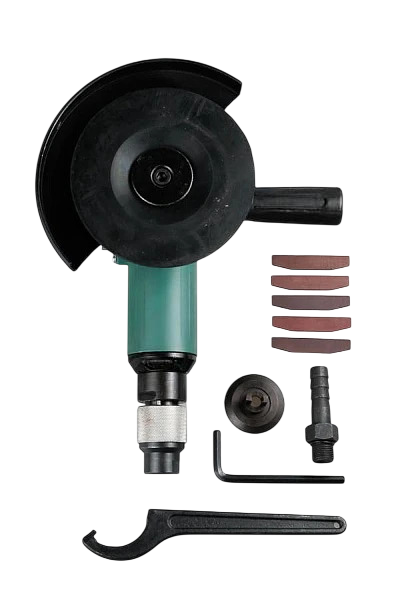
- Disc diameter: The most common size for pneumatic earwax is 125 mm (5"). It provides a good balance between maneuverability and performance. Models of 100 mm (for tight spaces) and 150/180 mm (for large volumes of work) are also popular.
- Spindle size (thread): this is the diameter of the thread for the mounting nut. M14 is the standard for discs 125 mm and higher. M10 - for discs of 100-115 mm. Make sure that the tooling in your workshop fits this size.
|
|
|
|
|
Criterion 4: ergonomics, weight and control system
Since the tool is often used for hours, convenience is not a luxury, but a condition for productivity and safety.
- Weight and balancing: A pneumatic earpiece is lighter than an electric one at the same power. Look for a model with good balancing that won't twist your arm if the disc is accidentally jammed. The weight of professional models is usually 1.5 – 2.5 kg.
- Lever/trigger control: should fit comfortably under the arm. Accidental start protection is a critical function. This is often implemented in the form of a two-position lever, which must be pulled aside before pressing.
- Protective cover: must be strong, keyless adjustable (quick-adjust) and match the selected diameter of the disc.
- Side handle: must be removable and can be adjusted to fit the left or right hand.
Criterion 5: brand reputation and maintainability
Pneumatic tools are purchased for years, so durability and serviceability come first.
- Workmanship: Forged aluminum alloy body is preferable to cast. Bearings must be protected from dust.
- Maintainability: check the availability of repair kits and service support in your area. A good sign is the opportunity to buy a set of seals, an impeller or bearings for self-repair.
- Additional options: the presence of a speed control (throttle) is a useful, but not mandatory option for finer control. A quick disk change system (for example, using a check nut) saves time.
Summary checklist for selection
Before buying a pneumatic earpiece for a workshop, please answer the following questions:
- Power: what kind of compressor do I have? (Compare its performance with the air consumption of the USM).
- Turns: what are my main jobs? (Cutting or stripping?).
- Size: what is the diameter of the disk I need for 80% of the tasks?
- Convenience: does the tool fit comfortably in your hand, is there protection against accidental starting?
Conclusion: a tool for intensive work
Choosing a pneumatic angle grinder is an investment in the productivity of your workshop. Focus not on the price in isolation from the parameters, but on the compliance of the tool with your pneumatic system and typical tasks.
A properly selected pneumatic earpiece will become your most reliable and tireless assistant in working with metal, capable of withstanding many hours of work, in which an electric tool would have overheated and failed long ago.