
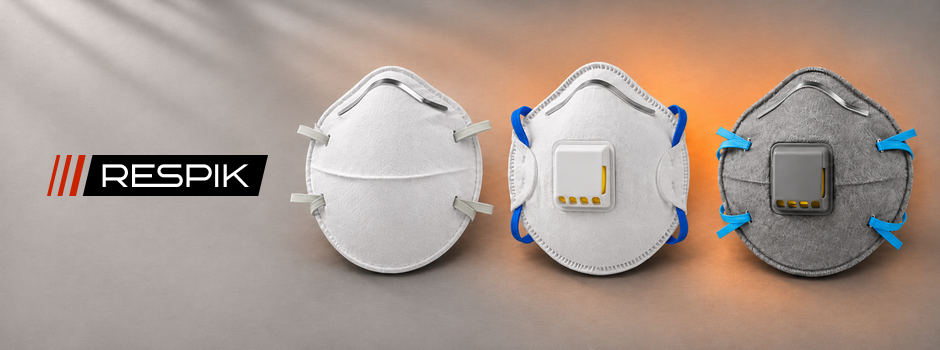
What does the general FFP2 class mean?
For the three RESPIK models, this comparison states one limit of application for aerosols — up to 12 MACs, i.e., maximum allowable concentrations. This value applies to solid and liquid particles in the air. If gases or vapors are also present in the area, their type and concentration are assessed separately. The same FFP2 class can be combined with different half‑mask designs and additional properties of the filtering material.
All three models have a molded cup‑shaped face piece. However, the fit is arranged differently. For two models in the RS series, the nose clip and seal help adjust the cup in the area of the bridge of the nose, and the elastic bands are attached to it at four points. The GX series model has adjustable headband straps. These differences can be assessed during fitting, when you can see how the half‑mask sits on the face and where adjustments are needed..
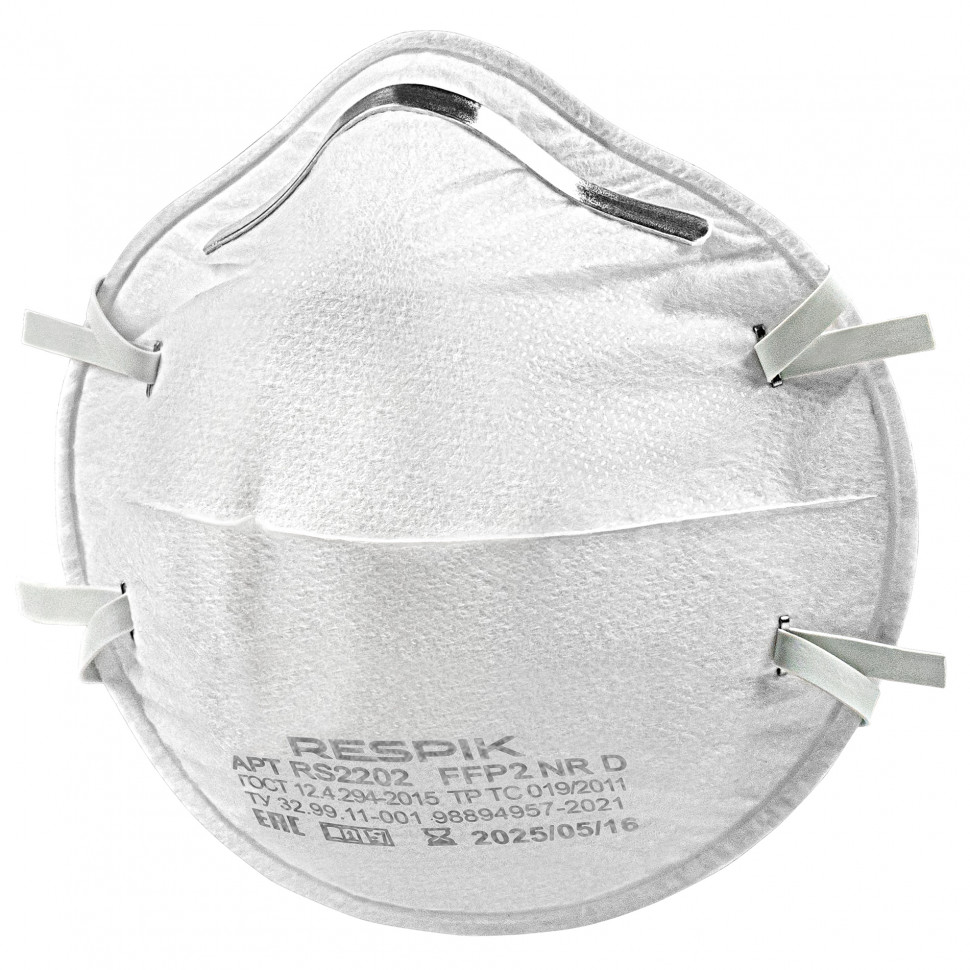
Lightweight half‑mask without a valve
The cup-shaped RS2202 weighs 9.5 g and is suitable for tasks requiring an FFP2 filtering half‑mask without an exhalation valve. When putting it on, the nose clip is adjusted to fit the shape of the bridge of the nose. For the version without a valve, the fit is checked during exhalation. If air passes through in the nose area, the clip is adjusted; if it passes along the edges of the cup, the position of the straps is checked.
The NR marking means that the half‑mask is designed for a maximum of one work shift. It should be replaced earlier if damaged or if there is a noticeable increase in breathing resistance. The Enex RS2202 is available in packs of 20 pieces. When calculating the required number for a given area, you can take into account the number of workers, the number of shifts, and a reserve for replacements during the shift.
|
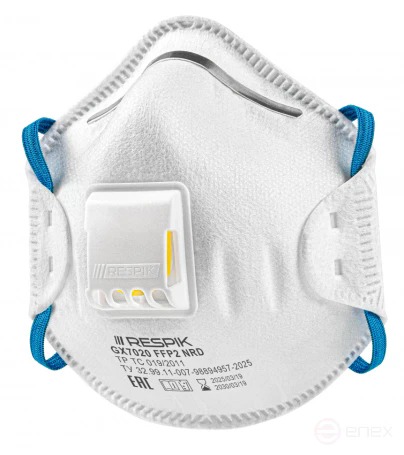
Exhalation valve and adjustable headband
The GX7020 valve helps to remove heat and moisture from under the half‑mask when exhaling. This design is suitable for protection against solid and liquid aerosols in areas where, with the same FFP2 class, moisture removal is important. The length of the headband straps is adjusted during fitting, and the soft seal in the nose area helps to achieve a tight fit.
The shape of the bowl at the bridge of the nose is designed to be worn together with protective or corrective glasses. During fitting with glasses, you can assess both the fit of the half‑mask and the position of the frame. GX7020 is available on Enex in packs of 10 pieces.
|
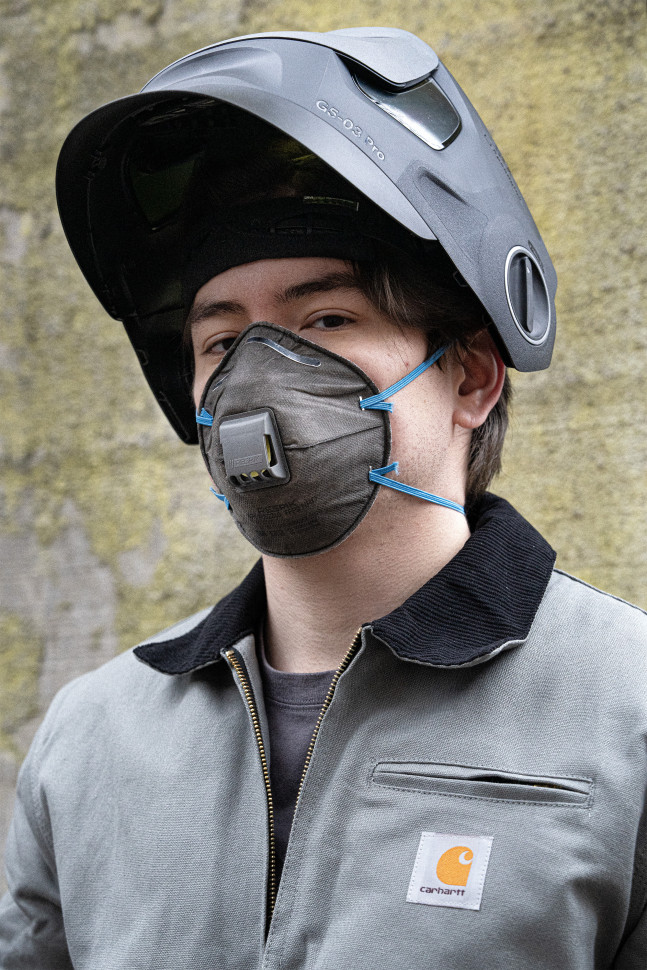
Design for welding aerosols
In the RS2240, the electrostatic filtering material is supplemented with a layer of activated carbon. The half‑mask is designed, among other things, to protect against welding aerosols. The carbon layer provides additional protection against ozone and the irritating effects of organic vapors within the limits established for the model. If the main task is protection against gases or vapors, the protective equipment is selected separately based on the composition and concentration of the pollutants.
The RS2240 has an exhalation valve, a nose clip, and a seal. The half‑mask weighs 17 g and is available on Enex in packs of 10 pieces. It has a certificate of conformity to the requirements of TR CT 019/2011 for a FFP2 NR D‑class filtering half‑mask. The letter D in the marking means that the half‑mask has passed the dust resistance test.
|
What to check before purchasing
For the application, you should first determine the type and concentration of contaminants for each work area and compare them with the application area of the half‑mask. For areas with aerosol contamination, this will help identify tasks where an FFP2 mask is suitable. Next, you can select the design based on the working conditions and check how it fits the employees, including when worn together with glasses in places where they are worn.
If the areas differ in terms of conditions, it is useful to indicate in the request for which workstation each item is intended, how many half‑masks are required, and how many pieces are included in the package. This way, the supply department will be able to convert the requirement from pieces to packages, and when issuing the items, it will be clear which design is provided for each area.