
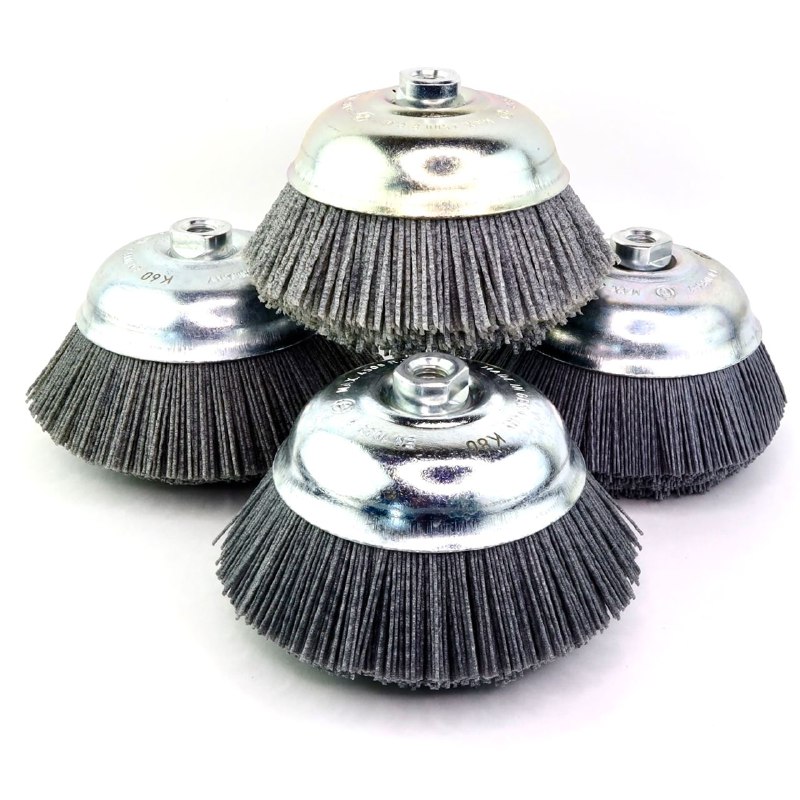
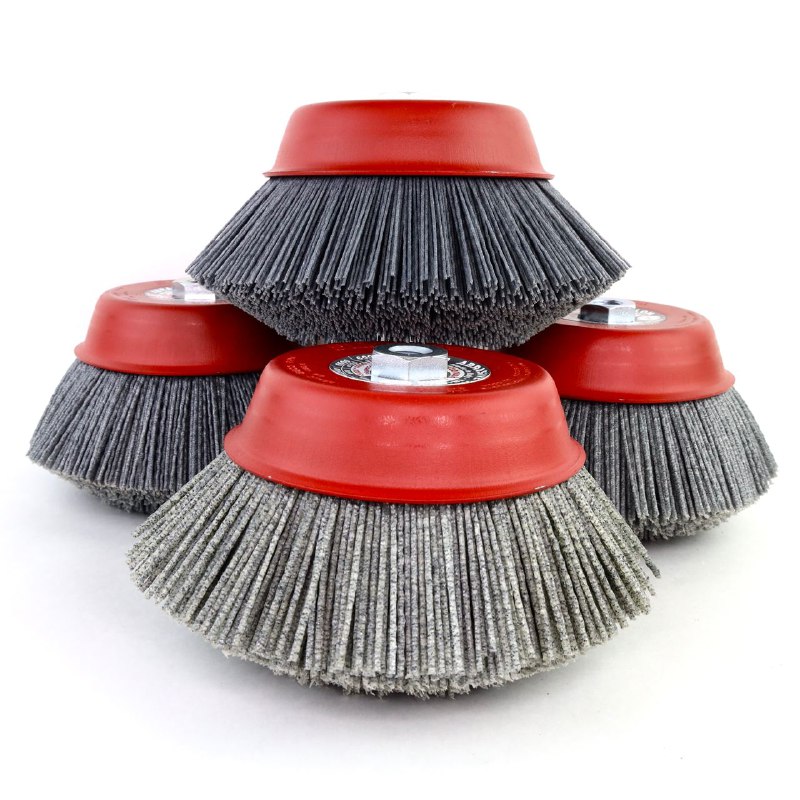
Osborn cup brushes with a pile of polymer abrasive (abrasive nylon) is a highly efficient tool for the USM (grinder) and UPM (corner polishing machine) that will do all the hard work for you.
|
|
Why do craftsmen choose these brushes?
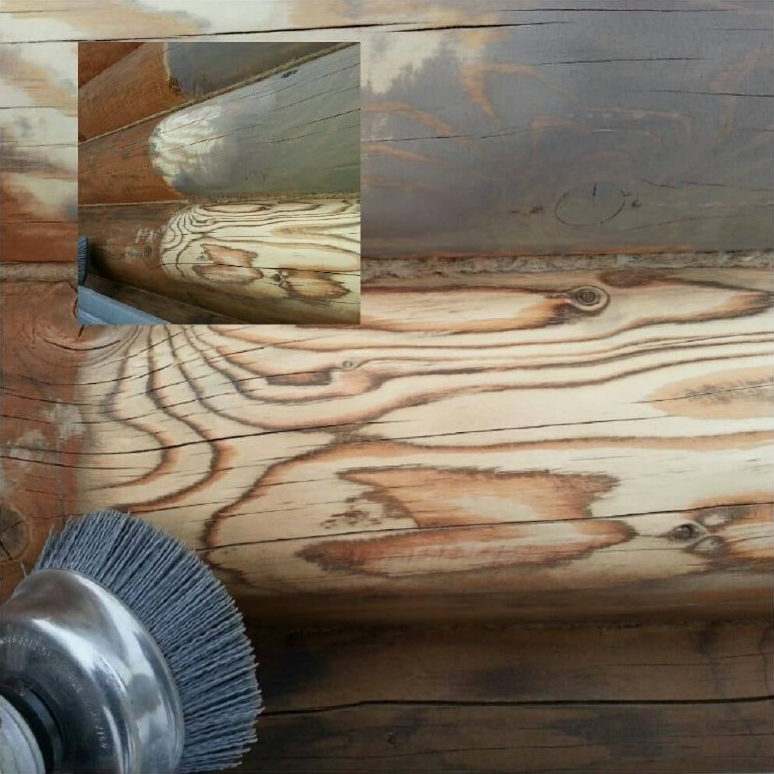
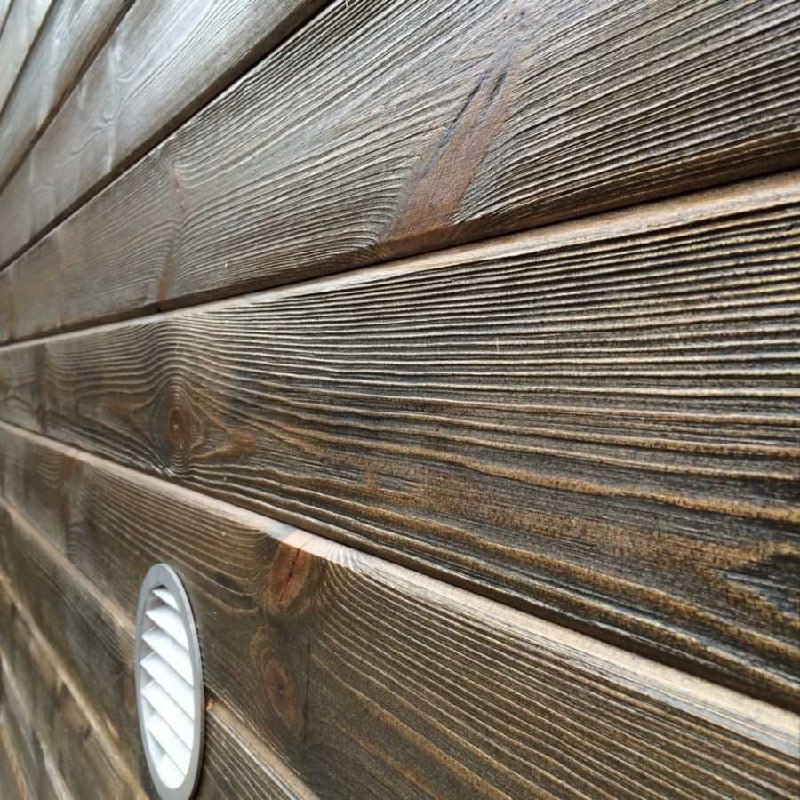
- Perfect for facades and walls: The cup shape is the most optimal option for vertical surfaces. The brushes gently follow the contours of the wood, making them perfect for walls made of logs, timber (regular and glued), paneling, planks, and imitation timber.
- Work in hard-to-reach places: When the motor is running, the corrugated bristles open up and can easily fit into the corners of walls where other tools cannot reach.
- High-quality material: The bristles are made of special abrasive nylon with embedded silicon carbide. It does not get clogged with dust, does not rust, and works very gently, emphasizing the natural texture of the wood not only visually but also to the touch.
- Fitment: The standard M14 thread makes the attachment compatible with most modern angle grinders and polishing machines.
|
|
Grit for any task:
- P46 — the most rigid bristles. Used for deep brushing, scraping, and rough sanding.
- P60 — for medium-depth texture highlighting and intermediate sanding.
- P80 — used for finishing sanding or delicate finishing after passing with coarse grain P46.
- P120 — soft brush for perfect finishing sanding, light relief and polishing.
Tips from professionals on use:
- Observe the speed: For high-quality brushing, it is necessary to maintain a speed in the range of 800 to 2500 rpm. Therefore, it is recommended to use a tool with speed control.
- Do not press on the tool! The brush should work with the tips of the bristles. Strong pressure will not speed up the process, but will only cause the bristles to break.
- Take care of the attachment: At 800 rpm, you will cover the maximum area, and at 2500 rpm, you will achieve the maximum speed, but the brush's lifespan will be reduced. Important: At speeds exceeding 2500 rpm, the wood may start to burn, and the bristles may melt due to centrifugal force.
- Resource: When used correctly and at the recommended speed, the average resource of such a brush is about 170 m² (the final figure depends greatly on the type of wood, the number of knots, and the desired depth of the relief).
Don't waste time and effort on ineffective processing methods. Equip your tool with the right attachment and enjoy the perfect result!