AMO LN360 Laser Level


 Russia
 China
China
Description
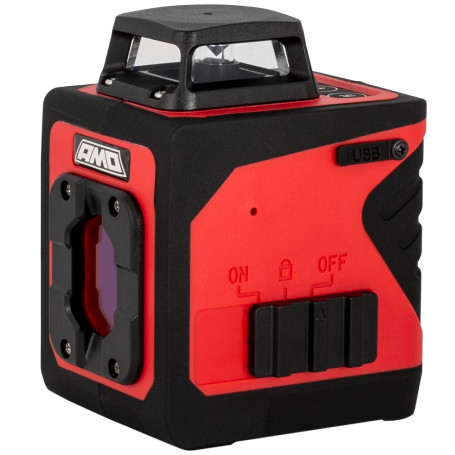
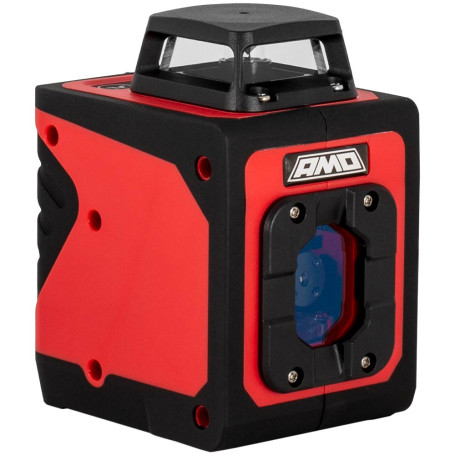
The AMO LN360 laser level is designed for finishing and repair work. The device projects a 360° horizontal line and a vertical line with an accuracy of ± 1 mm/5 m. Due to its high performance characteristics, the model is equally well suited for both construction professionals and home craftsmen.
Effective range
Bright rays are clearly visible at a distance of up to 20 m, while the model can be used in conjunction with the receiver at distances up to 50 m, which is very convenient for street work - landscaping, installing fences, etc.
Design features
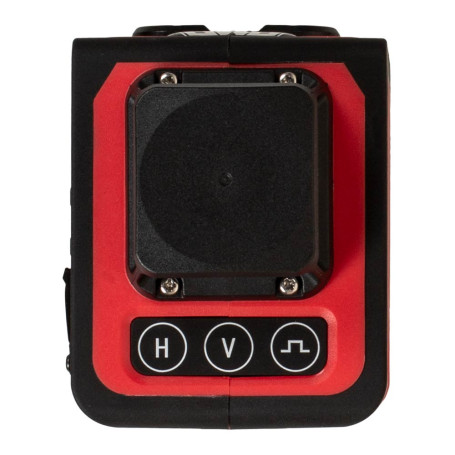
The lines can be turned on both together, in the form of a cross, or separately, to save battery power or better match the current task. The prisms of the emitters can be removed for alignment, if necessary.
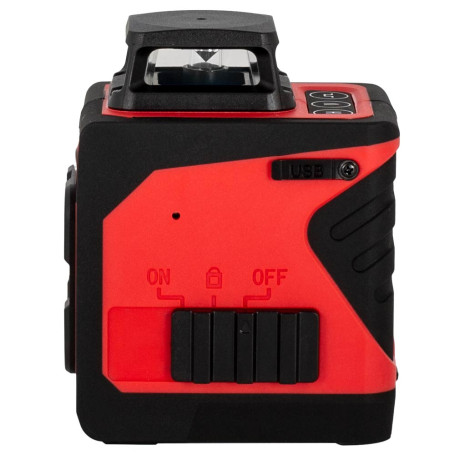
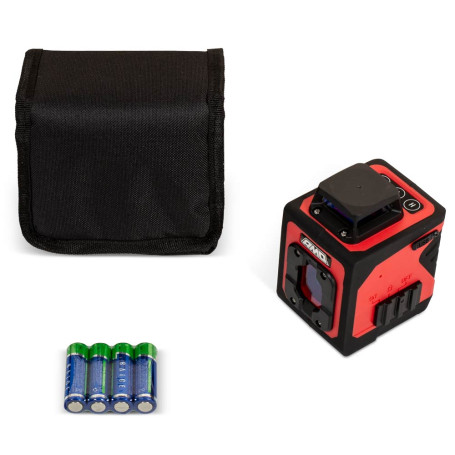
The AMO LN360 laser level is equipped with a USB charging port, which will be useful if “AA” batteries are used.
Installation options
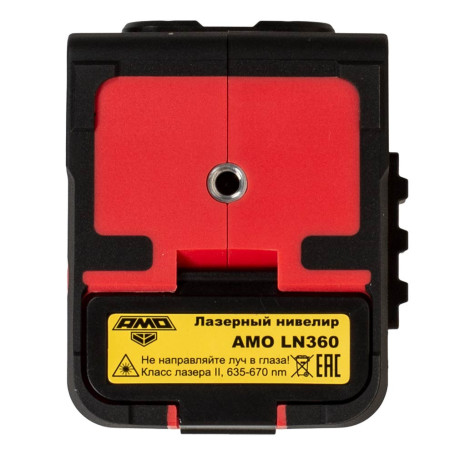
The device can be placed on any flat surface, while the slope up to 3 ° is automatically compensated, and when this limit is exceeded, the lines begin to flicker. For comfortable work at an angle, the level is equipped with a metal sleeve with a 1/4” thread, which is used for mounting on a tripod.
Reliability and ergonomics
All corners and protruding parts of the level are rubberized. The housing is protected from construction dust and water according to IP54 class.
The AMO LN360 laser level fits comfortably in your hand, and the large buttons are comfortable to use with gloves. Light weight and dimensions ensure ease of use and transportation.
Characteristics
General Specifications
China
Russia
Dimensions of packaged product
Specifications
- Vertical / Horizontal: The basic option for simple tasks (mounting shelves, leveling paintings).
- Scan angle (e.g. 100° or 240°): Indicates the length of the line. The larger the angle, the less you need to rearrange the device to capture adjacent walls.
- 360° (circular marking): The line runs around the entire perimeter of the room. This allows you to work in the entire room at once without turning the level. Ideal for stretch ceilings and floor screeds.
- Points (up/down/ forward/sides): Called a "plumb line". They are used to transfer labels from the floor to the ceiling (for example, when installing lamps) or to quickly arrange partitions at right angles.
- Vertical / Horizontal: The basic option for simple tasks (mounting shelves, leveling paintings).
- Scan angle (e.g. 100° or 240°): Indicates the length of the line. The larger the angle, the less you need to rearrange the device to capture adjacent walls.
- 360° (circular marking): The line runs around the entire perimeter of the room. This allows you to work in the entire room at once without turning the level. Ideal for stretch ceilings and floor screeds.
- Points (up/down/ forward/sides): Called a "plumb line". They are used to transfer labels from the floor to the ceiling (for example, when installing lamps) or to quickly arrange partitions at right angles.
-
8-20 meters: Ideal for household repairs, apartment decoration, wallpaper gluing and furniture installation.
- 20-50 meters: Suitable for working in large rooms, sales halls or suburban areas in cloudy weather.
- More than 50 meters (up to 600 m): Professional rotary levellers for large-scale construction and road works.
-
8-20 meters: Ideal for household repairs, apartment decoration, wallpaper gluing and furniture installation.
- 20-50 meters: Suitable for working in large rooms, sales halls or suburban areas in cloudy weather.
- More than 50 meters (up to 600 m): Professional rotary levellers for large-scale construction and road works.
Additional characteristics
Terms of delivery
Who provides the delivery of goods?
On the Enex marketplace, you order the product directly from its supplier, and Enex employees organize the delivery in the way you choose.What are the delivery methods?
You can choose any convenient way for you to receive an order:-
Pickup from partner locations or from the manufacturer's warehouse
If the manufacturer or trading company has the possibility of pickup, you can pick up your goods yourself or use the services of any transport company. Pickup is free of charge. -
Delivery to the terminal by a transport company
Pick up the goods at the nearest terminal of the Business Lines shopping center or DHL in your city. The delivery time and cost depend on your region and the dimensions of the cargo - they will be known at the stage of ordering. -
Delivery to the door by courier of the transport company
Receive the goods at your address via a Business Lines courier or DHL. The delivery time and cost depend on the region and the dimensions of the cargo - they will be known at the stage of ordering.
How can I keep track of the shipped product?
After you have selected your preferred delivery method and placed an order, you will be able to monitor the change in its status by the number in your personal account, and track the immediate location of the product by the track assigned by the delivery service. You will also receive email notifications about changes in the status of your order. This way, you will always know where your product is located and respond promptly to changes.Payment methods
Payment by bank card online
You can pay for the goods with bank cards "Visa", "Master Card", "Mir", "JCB". Payment by bank card is made without commission.- your bank card number;
- expiration date of your bank card;
- CVV code for Visa / CVC code for Master Card: the last 3 digits on the signature strip on the back of the card;
- confirm the card transaction, for example, with a one-time password from an SMS.
Payment according to the invoice
On the checkout page, select the “Invoice payment” option, and after placing the order, the system will automatically generate and send you an invoice for payment to the specified email address.Payment with bonuses
The buyer can pay part of the order cost (up to 20%) with Enex bonuses. The procedure and conditions for calculating and debiting bonuses are specified in section 7 Rules of sale and delivery.The seller's indication on the marketplace
Various suppliers of tools and equipment trade on the Enex marketplace. These can be both manufacturers and trading companies. In this case, the Marketplace acts as an agent (Chapter 52 of the Civil Code of the Russian Federation). Enex itself can also act as a seller for some products. Learn more about ordering from different suppliers.Return of goods
Is it possible to return the purchased product?
If you are not satisfied with the product purchased on the Enex platform, you can return it or exchange it under the conditions specified below. Since buyers conclude direct purchase and sale transactions with manufacturers on the Enex platform, the return of goods is carried out directly to manufacturers.
Return of goods of proper quality
For individuals
The buyer-an individual has the right to refuse the ordered goods at any time before receiving it, as well as after receiving the goods - within 7 days, not counting the day of purchase. The return of the goods is possible if its presentation and consumer properties are preserved, as well as a document confirming the fact and conditions of purchase of the goods.
The buyer does not have the right to refuse a product of proper quality having individually defined properties if the specified product can be used exclusively by the buyer acquiring it.
In case of refusal of the goods of proper quality, the cost of services for the organization of delivery to the buyer is not refunded. Transportation costs for the return of goods of proper quality are borne by the buyer. The method of returning the goods is determined by the buyer.
For legal entities
The return (exchange) of goods of proper quality by the buyer, who is a legal entity (individual entrepreneur), is not allowed, unless otherwise provided by the agreement with the supplier.
Return of goods of inadequate quality
For individuals
The buyer, who is an individual, in cases provided for by law, may return the goods of inadequate quality during the warranty period for the goods and demand a refund of the amount of money paid for the goods. The goods of inadequate quality, in agreement with the buyer, can be replaced with a similar product of proper quality.
For legal entities
The buyer, who is a legal entity (individual entrepreneur), in the event of the transfer of Goods of inadequate quality to him, has the right to make claims provided for in Article 475 of the Civil Code of the Russian Federation.
Distribution of responsibility
In case of return/replacement of low-quality goods, the cost of delivery of the goods is paid by the supplier. The supplier reserves the right to accept the goods of inadequate quality from the buyer and, if necessary, to check the quality of the goods. If, as a result of the examination of the goods, it is established that its shortcomings arose due to circumstances for which the supplier is not responsible, the buyer is obliged to reimburse the supplier for the costs of conducting the examination, as well as the costs associated with its storage and transportation of the goods.
If any defect is found in the product, the manufacturer and (or) the marketplace has the right to require the buyer to provide a photo of the product, the claimed defect, packaging, labeling (nameplate) of the manufacturer.
If the buyer, who is a legal entity (individual entrepreneur), refuses the goods of inadequate quality, such buyer is obliged to return such goods to the supplier. The buyer - an individual can also return the goods to the address of the supplier or Marketplace.
Transportation costs for the return of low-quality goods are borne by the supplier or Marketplace.
The difference between the shades of the goods in the photo and the real goods is not a sign of poor quality.
For questions about the return or exchange of goods, please contact us by phone 8 800 707-56-00 or by email: info@enex.market .