
Key advantages of LiFePO4 batteries
- Long service life
- Lighter weight
- Fast charging
- High efficiency
- Security
|
|
|
The role of traction batteries in the operation of forklifts
Traction batteries provide warehouse equipment, such as various types of forklifts, with electrical power. Traction batteries with a voltage ranging from 12 to 80 volts are used for this purpose. One of the most common types is the 48-volt battery.
Classification of batteries for forklifts
The most common traction batteries for forklifts are:
- lead-acid with liquid electrolyte;
- lithium batteries.
Lead-acid with liquid electrolyte
The liquid-electrolyte lead-acid batteries are popular due to their very affordable purchase price.
Key specifications of liquid-electrolyte lead-acid batteries:
- A solution of sulfate (sulfuric) acid is used as the electrolyte.
- Lead oxide plates are used as the separator.
- Specific capacity: 25 to 40 Wh/kg. That is, they are quite voluminous, large-sized and at the same time - heavy.
- Efficiency in the range from 70 to 80%.
- Can be operated at temperatures from -40 to +40 degrees Celsius, according to the technical specifications that the manufacturers themselves publish.
The structure of such batteries is cell-based. In most cases, these batteries are serviceable. This means that during active and regular use, it is necessary to monitor the density of the electrolyte solution, as it directly affects the electrical conductivity of the cells and plates. The nominal density is typically around 1.29 to 1.31 g/cm3.
Key advantages of lead-acid batteries
- Low price. Among all batteries, they are among the cheapest.
- High current limits. This allows them to be used as traction batteries.
These batteries also have many disadvantages. In particular
- Low service life. Traction lead-acid batteries, on average, begin to actively lose their capacity after 80 to 150 charge/discharge cycles (depending on the loads and operating temperature). For forklifts, this is literally 2 to 4 months of regular use.
- Low specific capacity. This means that the equipment will not last long on a single charge cycle. You will need to manually replace the batteries with spare ones.
- Long charging time. Lead-acid batteries need to be charged with a weak charge. And the entire charging cycle can sometimes take even more than 20 hours. Again, this brings certain limitations for their active use in a warehouse environment (especially if the loader needs to be operated 24/7).
- The need for regular preventive maintenance. This means that you need to monitor the density of the electrolyte and add sulfuric acid or distilled water. If you do not do this, the battery's lifespan will be significantly reduced.
- They do not tolerate prolonged peak loads well. For example, battery packs may indicate that they are designed for a load of 600A. But if it lasts more than 1 minute, it often leads to damage to the separator plates due to the "boiling" of the electrolyte, which releases gas. This increases the internal pressure and literally compresses all the elements inside the casing.
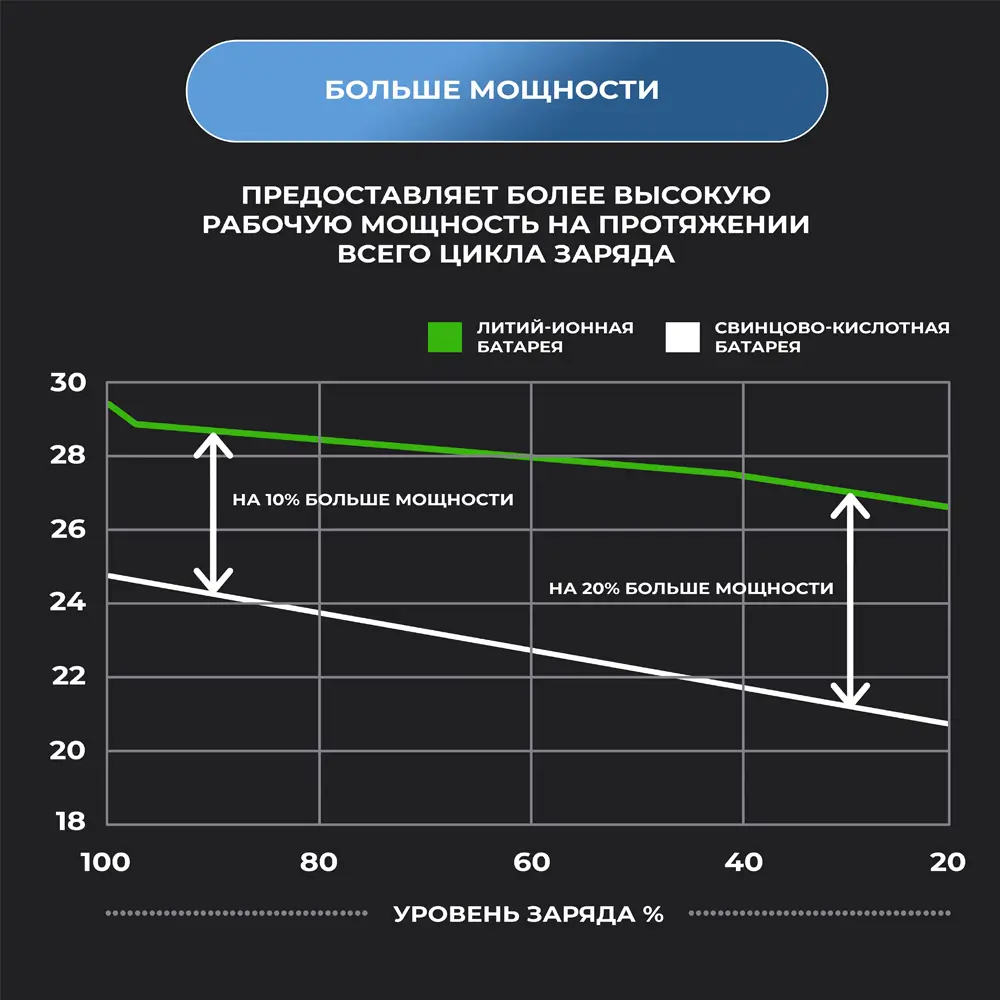
- When under load, the voltage drops significantly. Consequently, if you draw high current from them, they will not actually deliver their rated capacity. In some cases, the capacity may be reduced by up to 50%.
- Fire and explosion hazards during charging - special rooms with ventilation are required (Brown gas).
- Significant fixed operating costs.
It turns out that the only significant advantage of lead-acid batteries is their low initial purchase price.
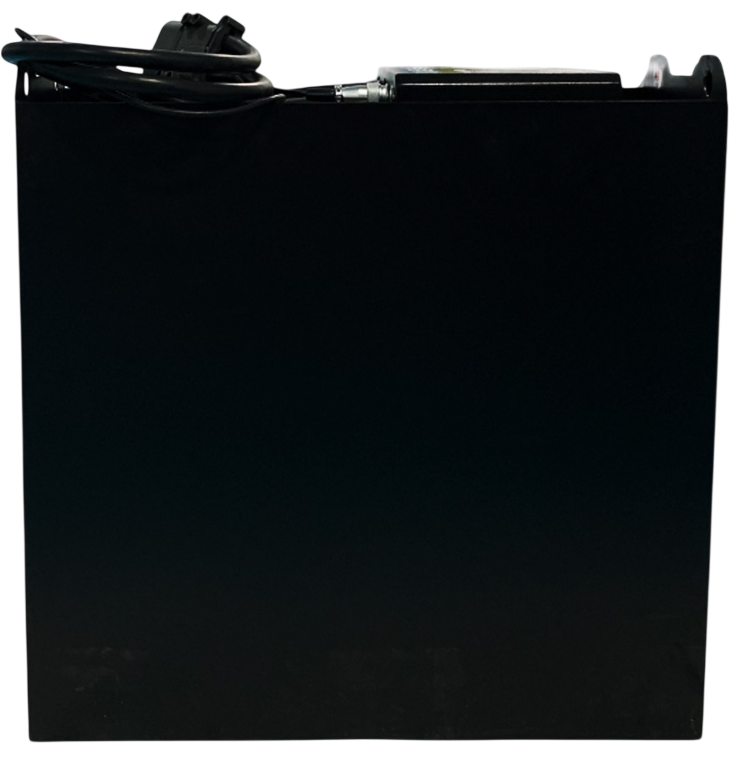
|
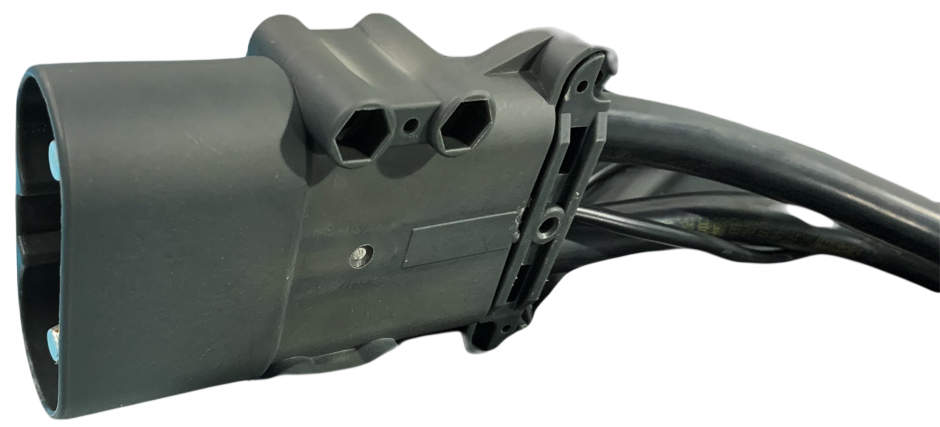
|
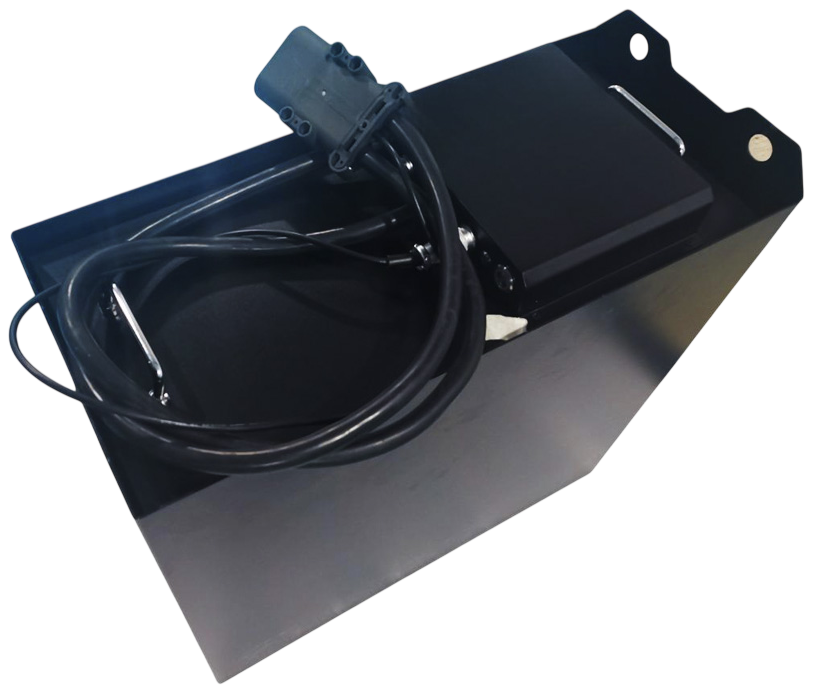
|
Lithium batteries (LiFePO4)
Nowadays, traction batteries for forklifts with lithium electrolyte are used more and more often. Yes, they cost an order of magnitude more than lead-acid ones, but they significantly surpass them both in operational and resource characteristics. In most cases, their purchase is financially justified.
Their main specifications:
- Operating voltage in the range of 12 to 80 Volts.
- The electrolyte is lithium tetrafluoroborate.
- The separators are made of polyethylene and polypropylene.
- The specific capacity is between 90 and 170 Wh/kg.
- The service life is between 3 and 8 thousand charge cycles Lithium-iron-phosphate batteries also have advantages over them. The only thing that lithium-ion batteries excel at is their specific capacity per kilogram (they have a 20% higher charge density on average).
Advantages of Lithium-Iron-Phosphate Batteries
- High specific capacity. They are almost 2.5 times smaller in volume than lead-acid batteries.
- Huge service life. On average, from 3 to 8 thousand charge/discharge cycles.
- They can be charged with a current of up to 1C. The recommended values are between 0.25 and 0.50C. This means that it takes between 1 and 4 hours to fully charge them.
- They have an increased efficiency of up to 97%. This is significantly higher than that of any other battery.
- The cells of lithium-iron-phosphate batteries have an extremely low resistance. Therefore, they do not heat up during operation, like conventional lithium-ion batteries.
- The heating is insignificant even under significant loads. As a rule, each traction battery is equipped with a special overheating protection system that reduces or completely disables the load in case of an emergency.
- No technical or preventive maintenance is required. Occasionally, it may be necessary to clean the poles from oxides (if the terminals were installed without anti-corrosion grease).
- The capacity does not decrease during the entire period of operation. According to manufacturers, a decrease in capacity may be observed only after 4,000 to 8,000 charge/discharge cycles (no more than 20% of the initial capacity specified in the technical specifications).
- They can easily withstand vibration. However, lead-acid batteries with liquid electrolyte often fail under constant vibration (due to internal cell short circuits).
- They do not have the memory effect like lead batteries.
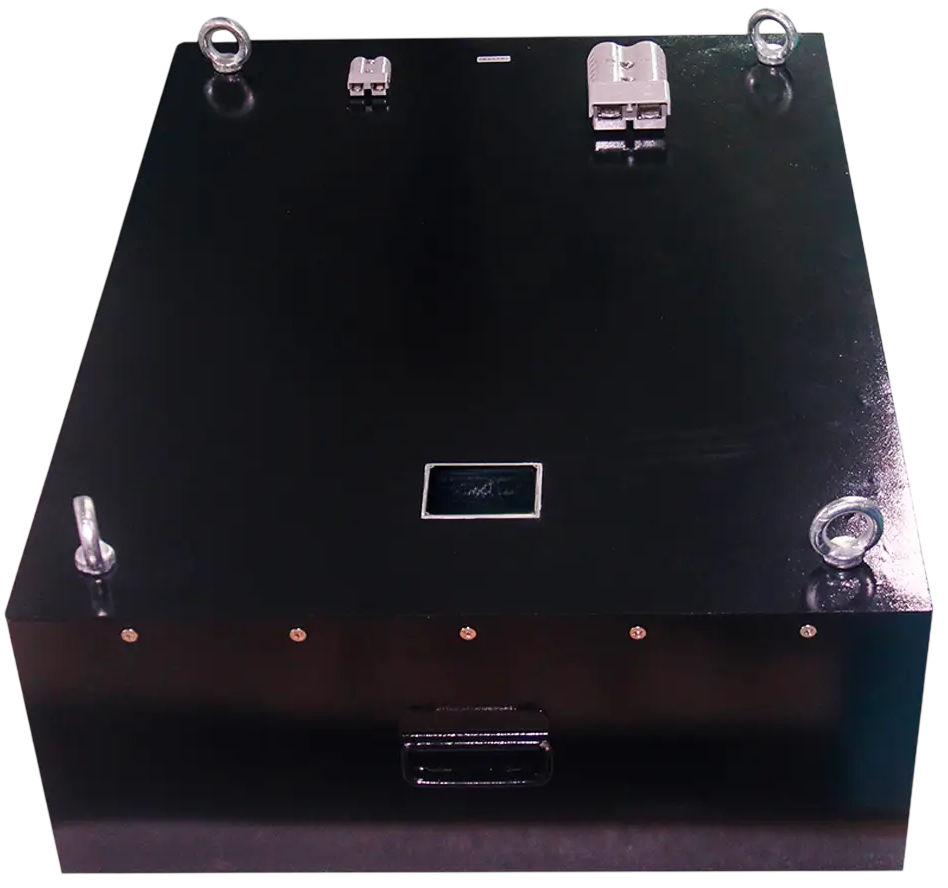
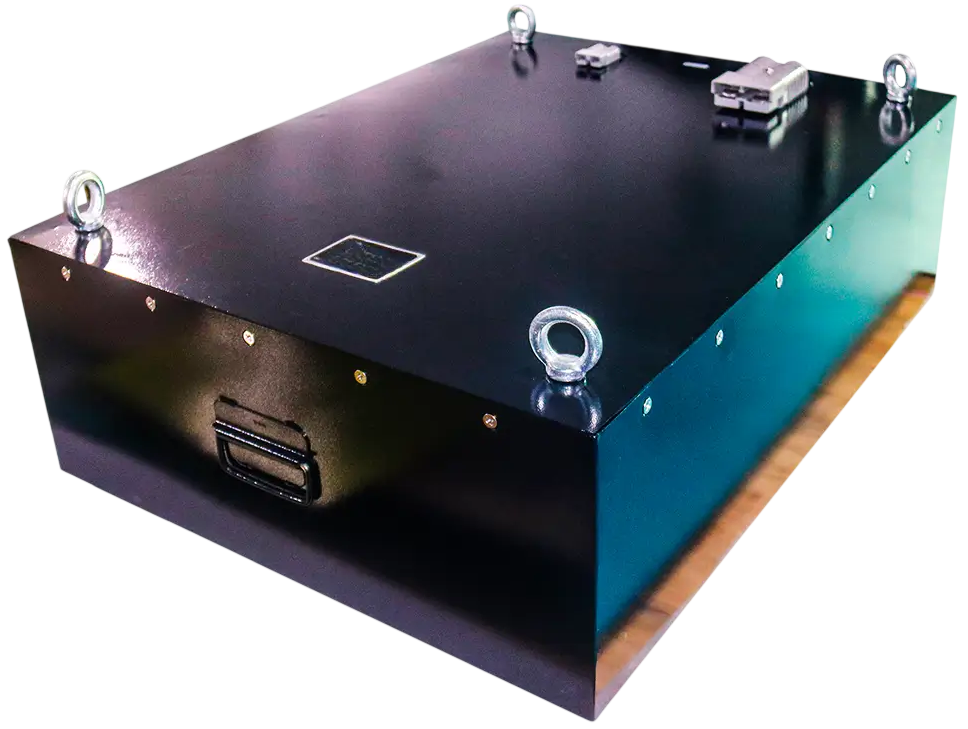
Lithium-iron-phosphate batteries have fewer disadvantages, including
- They cannot be charged at negative temperatures;
- When operating at temperatures below 0 degrees Celsius, their capacity decreases slightly, and their service life decreases (all of this can be mitigated by using a heating system);
In terms of cost, they turn out to be more expensive by about 5 times for lead-acid. But we should not forget that their operational resource is almost 30 – 50 times more. So the purchase of lithium-iron-phosphate batteries for use in warehouse forklifts is quite justified. And for the entrepreneur it turns out to be many times more profitable.
Features of LiFePO4 prismatic cells
Almost all traction batteries for forklifts based on lithium-iron-phosphate batteries are produced in the form of prismatic cells (so-called "cells"). They differ from cylindrical batteries only in their shape and, consequently, in the structure of their casing. However, prismatic batteries offer the highest specific capacity per volume.
The internal structure of these batteries is as follows:
- The lithium-iron-phosphate cathode is positive.
- The negative cathode is graphite.
- The cathode substrate is a polymer base with aluminum coating.
- The anode substrate is a polymer base with copper coating.
- The electrodes only pass through the external circuit, and the separator only allows ions to pass through, which completely eliminates the possibility of a short circuit. Even if a short circuit does occur, it is not critical or dangerous.
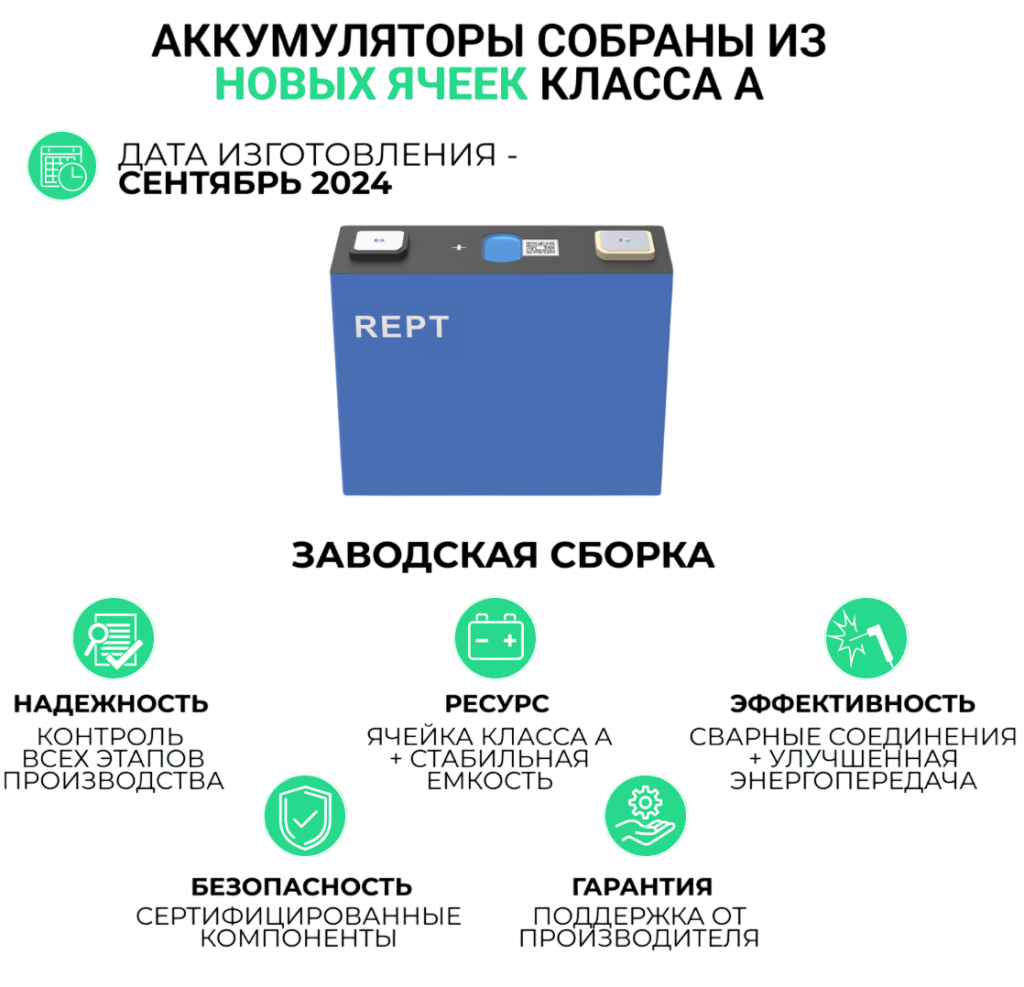
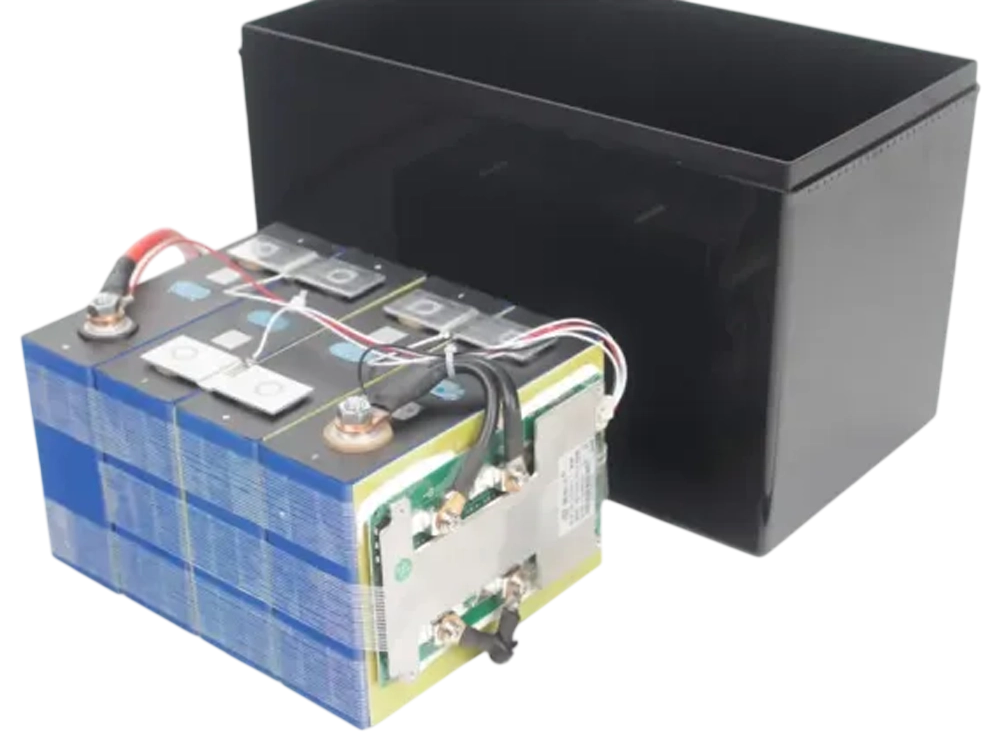
The design of prismatic lithium batteries is well-thought-out and safe. This option allows you to achieve the highest possible density, ensure absolute fire safety, and make it easy to create traction batteries (assemblies of prismatic elements). They are ideal for industrial applications.
Using LiFePO4 batteries with heating
It is not uncommon for warehouse forklifts to be operated in environments with extremely low temperatures. For example, in industrial refrigerators, where the average temperature ranges from -30 to -18 degrees Celsius. In theory, it is possible to use lithium-iron phosphate batteries in such conditions. But cell degradation in this case can occur faster than usual.
What to do in such cases? Use LifePo4 batteries with heating. As a rule, an additional protection board with a thermal sensor is built into them. Along with this, there is a heating element placed on the inside of the case.
Accordingly, such batteries automatically heat up to an optimal operating temperature of +5 to +10 degrees Celsius. The design is also safe, as the heating is automatically turned off if the temperature rises to critical levels. The cost of such batteries is only slightly higher.
As a rule, the seats for lithium-iron-phosphate batteries in forklifts are also equipped with an automatic temperature control system and thermal insulation. In case of high-temperature operation, these can be removed to provide cooling through natural ventilation.
Heated batteries have been actively used for over 20 years. They have proven to be effective, cost-efficient, safe, and convenient.
Benefits of LiFePO4 traction batteries for forklifts
Why should 48V lithium iron phosphate traction batteries be used in forklifts? Here are some of their key advantages:
- It is cost-effective and justified. If the forklift is used regularly, the purchase and maintenance of lead-acid batteries will be significantly more expensive in the end.
- They can be used in virtually any environment. Their casing is reliably protected from moisture and dust. They can be integrated with an automatic heating system. This allows them to be used both in industrial refrigeration systems and outdoors in any weather.
- High specific capacity. This means that a forklift equipped with a single fully charged lithium-iron phosphate battery can operate for a significantly longer period than a forklift equipped with any type of lead-acid battery (whether it has a liquid or gel electrolyte).
- Absolute fire safety. As a result, forklifts equipped with lithium-iron phosphate batteries can be used even in warehouses where flammable materials are stored.
- Fast charging. Each forklift will require a set of two batteries to ensure uninterrupted 24-hour operation. If you use lead-acid batteries, you will need an average of 4 to 6 batteries.
- Wide operating temperature range. It can be used in refrigerated environments and under direct sunlight: this will not affect their operational life, technical characteristics, or specifications in any way.
- High energy density. Simply put, these batteries take up little space but provide a long runtime on a single full charge.
- Environmental friendliness. Each lithium iron phosphate battery has a lifespan of around 15 years. They can be recycled and reused. That is, they do not cause any harm to the environment.
- They require minimal maintenance. The main thing is to make sure that the batteries do not remain in a discharged state, as this can lead to accelerated degradation of the cells. If there is a built-in BMS board, it may even block the further use of the cells. In such cases, it is necessary to contact a service center to manually increase the voltage of each battery to the required minimum (this value is specific to each BMS board and is determined by the manufacturer).
- Very low self-discharge rate. Practice shows that after storage for 12 months, lithium-iron-phosphate batteries lose only up to 10% of their original charge. This means that they are always ready for use.
- All lithium-iron-phosphate batteries are equipped with protection against incorrect load connection. Even if the operator mixes up the poles in any way, neither the equipment nor the battery itself will be damaged in 99% of cases. Lead-acid batteries usually do not have any protective features. If the polarity is reversed, a short circuit occurs, resulting in the release of maximum peak electrical current.
Rules for operating traction batteries
Basic rules for operating traction batteries:
- After discharging a lithium-iron-phosphate battery, it must be charged as soon as possible.
- During the charging process, the voltage must be monitored. However, BMS boards are typically used for this purpose. They shut down charging when the maximum required voltage is reached, prevent overdischarge, and reduce the charging current if the battery reaches a critical temperature. Modern BMS-boards additionally perform the function of balancing the cells, thereby ensuring their uniform wear.
- When operating at temperatures below 0 degrees Celsius, it is recommended to use automatic heating systems. These systems warm up the battery to 5-10 degrees (both before starting and during operation).
- Do not keep the battery in a discharged state for more than 12 hours. Just to avoid that the BMS board does not "lock" the cell, mistaking it for a faulty one.
- Perform regular visual inspection of the battery. It is necessary to pay attention to the fact that the power cable is not damaged, the terminals are not oxidized, there are no signs of mechanical damage to the housing.
- It is forbidden to open or replace the cells of lithium-iron-phosphate batteries! This can only be done in a service center. Moreover, if one of the cells is no longer working or its capacity has decreased below a critical level, the battery must be disposed of and recycled in accordance with regulations. This will have a positive impact on the environment and the lifespan of the warehouse equipment.
How to Choose the Right Battery for a Forklift
When choosing 48V traction batteries, the following parameters should be taken into account:
- Operating voltage. It should be exactly 48 Volts. It is recommended to check this information in the technical documentation of the forklift truck. The operating voltage is indicated there (in the form of a range). This value must match the voltage of the battery being used.
- The dimensions must fit the mounting space. This is why the selection is based on the model or serial number of the forklift being used.
- The polarity must match the orientation of the connection terminals. In most cases, the positive contact is located on the left, and the negative contact is located on the right. However, in some models of Japanese forklifts, the polarity of the connection terminals may be reversed. Again, it is important to check this beforehand.
- It is necessary to check whether the forklift is equipped with a BMS board and a charge controller. In most cases, it is not equipped with these components. In such cases, it is recommended to choose a traction battery that has an integrated BMS board. Additionally, there are models that come with a Bluetooth module. This allows you to check the remaining charge, the end of charging time, temperature, and other parameters directly from your smartphone. In many cases, you can also find out the estimated remaining service life in this way.
- If the forklift is going to be used in a warehouse with a temperature below 0 degrees Celsius, then you should give preference to heated batteries. Alternatively, the heating system should be integrated into the loader's battery compartment, which is also a common feature.
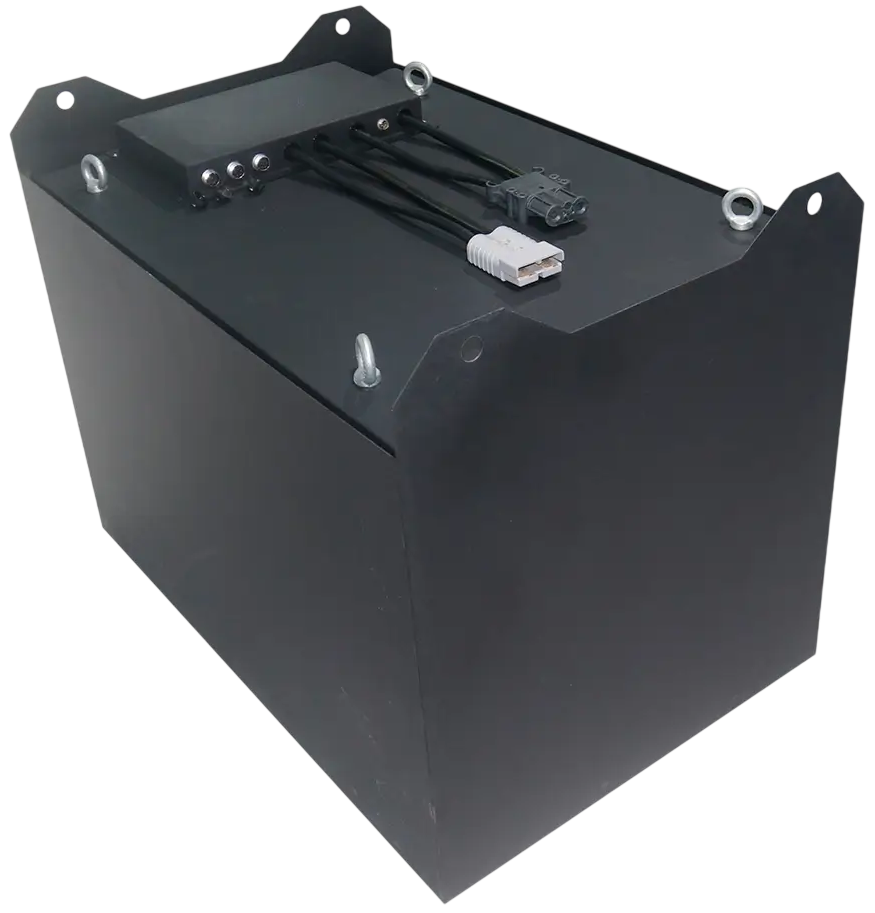
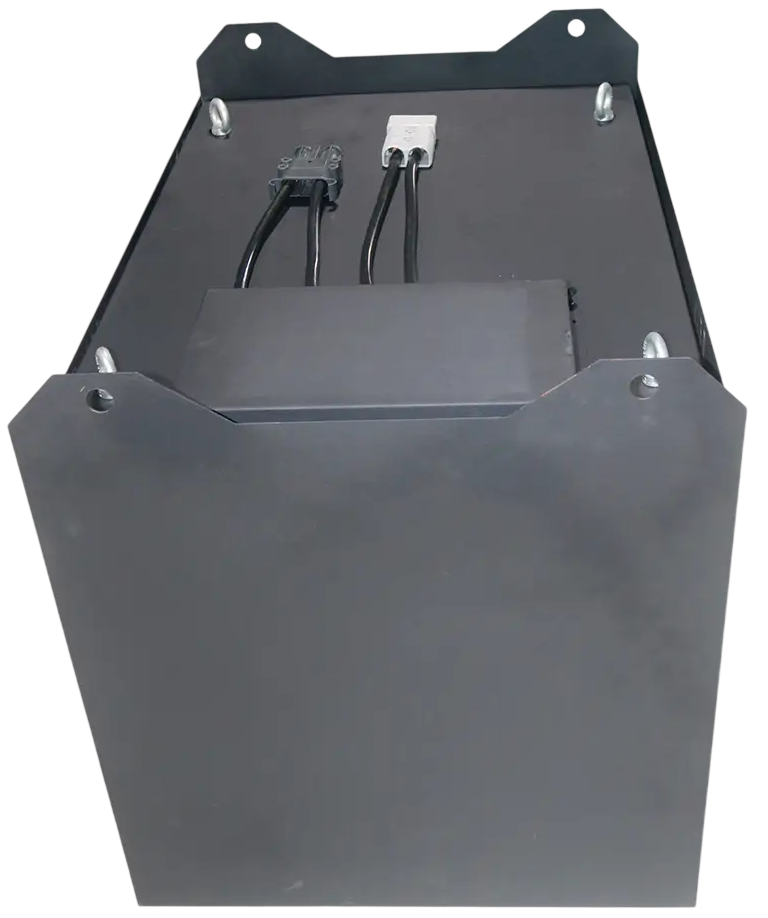
LITJET traction lithium-iron-phosphate batteries surpass any other batteries by all criteria. They are safe, their operation is cheaper, they fully meet GOST and ISO standards, they charge quickly. Most importantly: they have a huge operational resource, literally 50 times higher than that of lead-acid batteries with liquid electrolyte.
It is precisely because of all these criteria that they are now the most common. Nowadays, more than 40% of all electric vehicles produced use the same type of battery.