

Maximum protection against multiple risks
Both types of gloves are designed for comprehensive hand protection. They effectively protect against major mechanical injuries: punctures, abrasion, cuts and, most importantly, from impacts. The key element of safety is the special thermoplastic rubber pads on the back. These shock-absorbing inserts significantly reduce the impact force when working with the tool, minimizing the risk of bruises and more serious damage, even with strong impacts.
Specialization for different tasks
Despite the similar protective functionality, the models have a different design, focused on specific operating conditions.
- Winter shockproof gloves are designed to work outdoors in the cold season. Their base is 100% cotton fleece, which provides not only mechanical strength, but also excellent thermal insulation properties, keeping your hands warm and comfortable. The polyvinyl chloride (PVC) outer coating guarantees a secure grip and protection from oils, greases and petroleum products.
 |
- Shockproof nitrile gloves are designed for increased chemical resistance and tactile sensitivity. Their base is a soft and durable knitted fabric that provides a comfortable microclimate. The nitrile (synthetic rubber) coating has excellent resistance to aggressive substances, including oils, solvents and petroleum products, while providing excellent adhesion.
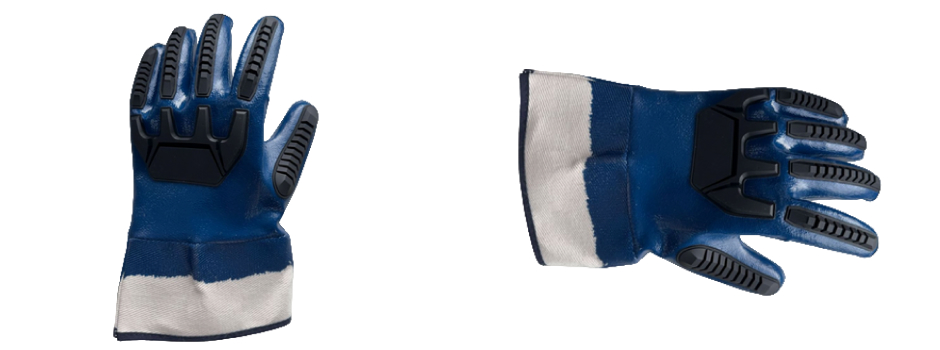 |
Versatility of application
Both models are used in a wide range of industries, including construction, auto repair, metalworking, agriculture, transportation, chemical and oil and gas industries. They will become an indispensable piece of equipment for specialists whose work involves the risk of mechanical injury and contact with technical fluids.
The introduction of these new gloves into work processes makes it possible to significantly increase the level of industrial safety, reduce injuries and provide employees with reliable protection without loss of efficiency and comfort in any conditions.