

What's wrong with modern batteries?
The portable power station market is experiencing rapid growth. These small devices have gained widespread popularity due to their versatility: they feature USB ports for electronics, 12-volt DC outputs, and a powerful 220-volt AC output. However, this has a downside: behind the attractive presentation lies a serious technical problem that has hindered product quality for years and driven up costs.
Causes of cell failure and power loss
Most portable power stations on the market use LiFePO₄ batteries with a nominal voltage of 12.8 V or 25.6 V. This means that at least four cells connected in series operate within the device.
However, there's an important caveat: the longer the cell string, the more critical it is that they be identical. If even one cell begins to degrade—losing capacity or producing less power - this immediately reduces the efficiency of the entire battery. As a result, the station will shut down earlier, become hotter, and fail faster.
New solution: one cell instead of four

|
|
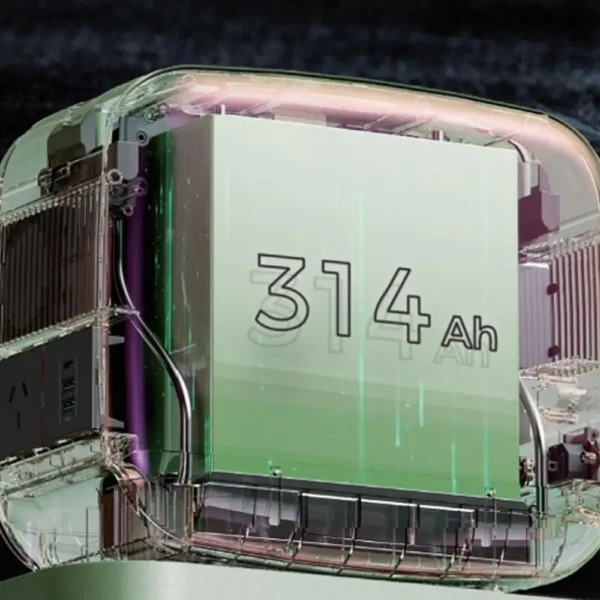
Litjet proposes using one powerful cell instead of four weak ones.
Advantages of the new solution
Eliminating the risk of imbalance
Using a single battery cell eliminates the need to ensure the coordinated operation of multiple cells. In the event of degradation, parameter changes occur within a single cell, without cascading effects on the system.
Optimization of the production process
The transition to a single-cell design significantly simplifies the production cycle:
- there is no need to connect multiple battery cells in series
- the need for balancing devices is eliminated
- the quality control process is significantly simplified
Integration of power and control electronics
All key system functions are combined on a single control board, which performs the following tasks:
- BMS protection: monitoring and regulation of battery voltage, current, and temperature
- MPPT controller: managing the solar panel charging process with maximum efficiency
- Inverter: converting DC to AC
- Central control unit: coordinating the operation of all system components
Disadvantages
In this regard, the optimal technical solution is to limit the output power to 300 W, which maintains a balance between the cost of the device, its reliability, and efficiency.
It should be emphasized that this limitation does not reduce the practical value of the system. For most typical operating scenarios—powering compact electrical appliances, providing emergency power, and use in camping environments—300W is more than sufficient.
Prospects
Instead of further complicating multi-cell systems, Litjet chose an alternative approach and achieved the following benefits:
- increased device reliability
- reduced production costs
- simplification of operation and maintenance
For end users, this means a more favorable balance of cost and functionality, and for the industry, it creates a new technological benchmark that competitors will inevitably follow.