
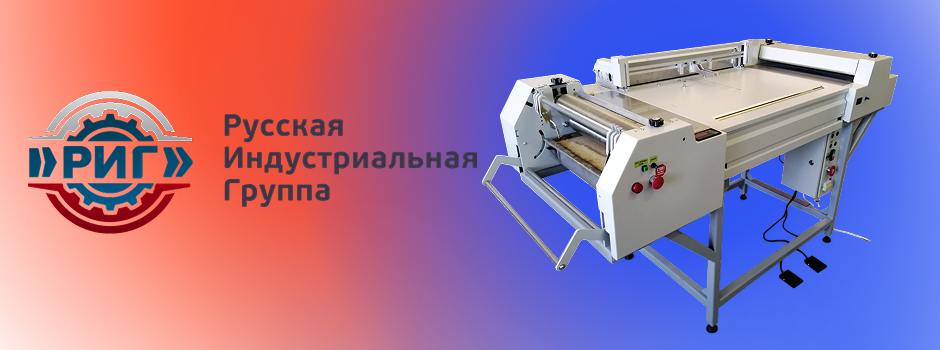
KDM "Cadet" is a semi-automatic lid-making machine, with a high degree of automation and ergonomics, and is also manufactured in accordance with GOST R 51205-98 .
KDM "Kursant" is designed for the production of small and medium-sized editions, allows you to produce a full range of cashing work, as well as hardcover work.
The Cadet KDM machine has a high degree of automation and ergonomics:
- automatic stops of the liner (binding material);
- automatic cardboard stops (bookbinding cardboard);
- the node of automatic bending of the edges of the binding cover;
- the node of mechanical bending of the edges of the binding cover (relevant in the presence of errors of the carver, non-standard orders, small-format products);
- automatic stacking of finished products (no time is wasted on storing finished products, the machine operator does not stop working when another employee takes finished products from him for subsequent technological operations);
- adjusting the speed of the adhesive shafts (operators usually work at high speed, but when making adhesives, especially small-format ones in products such as certificates, diplomas, etc., operators set a low speed for ease of operation and elimination of defects);
- precise positioning illumination (important when assembling digital prints, when the liner is printed on a digital printing press);
- built-in vacuum (no compressor is needed, as well as quiet operation of the machine, which allows it to be used in office premises);
- it is equipped initially with both turn-down and pass-through pens (turn-down pens are relevant when it is necessary to obtain a liner with glue up, such products as book covers, and pass-through pens are relevant for internal gluing when it is necessary to obtain such products as certificates and diplomas with glue down).
The Cadet KDM is designed in such a way that, due to the ergonomics of the process, it ensures high productivity, while structurally the machine is designed in such a way that the operator constantly monitors the quality of the products produced.
The 220 V single-phase power supply of the machine, with a heating consumption of up to 2 kW, allows it to be operated in office premises. When using Bricol glue (manufactured by Kleizhelatinprom LLC), no additional extraction is required, as well as there is no unpleasant odor.
At the end of the work shift, cleaning the car takes 1-2 minutes.
All these advantages of KDM "Kursant" provide high productivity, reduce operator errors and fatigue, and minimize maintenance time (setting up the machine for 1-2 minutes, cleaning the machine for 1-2 minutes).
Moreover, due to the fact that low-skilled personnel are often used in printing houses, the following protection systems are implemented in the machine:
- the system of protection of adhesive shafts from chipping, in case of ingress of foreign objects;
- the system of protecting the necks of the adhesive shafts from bending the necks (it is important when winding the liner on the shaft or foreign objects: keys, bolts, watches, scarves, etc.);
- surface protection technology for calendering shafts;
- automation protection technology against surges in the electrical network.
The machine allows you to produce both bookbinding covers, diplomas, certificates, folders, produce interior gluing, as well as the entire range of cashing work.
The principle of operation of the Cadet KDM is similar to the principle of operation of other equipment from other manufacturers, but it has significant differences.
The operator takes the liner and feeds it to the glue assembly, with pre-selected feathers.
- turning pens are used where it is necessary to turn the adhesive side up (book covers, diplomas, certificates, certificates, etc.)
- pass-through pens are used where it is necessary for the glue to remain turned down (gluing into diplomas, certificates, folders, etc.)
After receiving the liner (binding material) with the applied adhesive layer, the operator places it on the surface of the assembly table by pressing the electric pedal first.
When the pedal is pressed, the cardboard stops rise, under which the liner is placed, after which the pedal is released. The sides of the binding cardboard (plywood, foam board, plastic, metal, glass, etc.) are placed on the liner. Then the operator presses the second pedal and, at her command, the stops of the liner and the first one leave (lower), which releases both the liner and the cardboard, after which the workpiece is fed by hand by shifting it into the bend of the edges of the binding cover. The node, in turn, closes the edge, returns the workpiece back to the operator, feeding is carried out on each side. It would seem that the operator should spend more time on the production of such a lid, but due to the fact that time is not spent on dragging the entire lid (billet) under the calendering shafts, and calendering is performed at the final stage and the finished products are immediately stored, which the operator also does not waste time on, there is a reduction in the time spent for the production of the product. At the same time, the operator constantly monitors the quality of products, and the operations performed are clear.
The storage system (shelves), lighting of the working surface of the assembly table, electronic process control, and constant convenient visual control make it possible to achieve high ergonomics of the process, which in turn ensures high productivity.