
 |
 |
Batteries are divided into two main types:
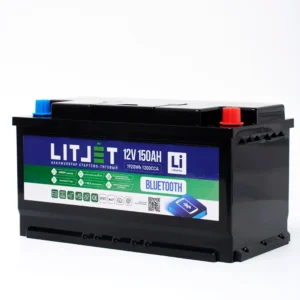
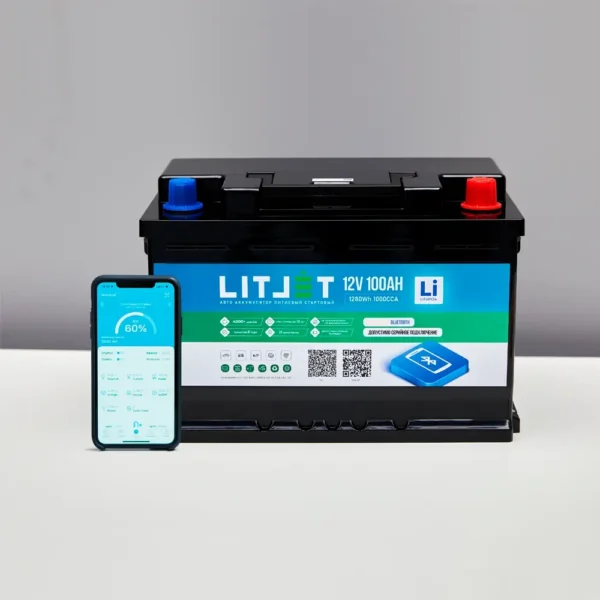
- Starter motors are designed for short-term, powerful operation (up to 10 seconds), for example, to start an internal combustion engine. The starting current can reach 800A.
- Traction motors: provide constant current supply for electric motors. The power is lower (150-200 A), but they are able to work for a long time without rapid wear.
The main difference is the inrush current. Traction engines are not suitable for starting an internal combustion engine, and starting engines cannot withstand prolonged operation in electric vehicles.
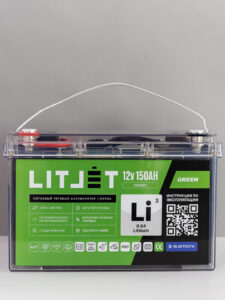
Today, lithium-iron-phosphate (LiFePO4) traction batteries are the most preferred for electric vehicles. They have a huge operational life (up to 4,000 charge/discharge cycles) compared to other types (lead-acid or gel, which require maintenance and which have a significantly shorter service life).
What is battery capacity and why is it important?
Battery capacity: a key factor for electric vehicles
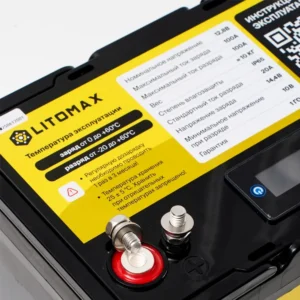
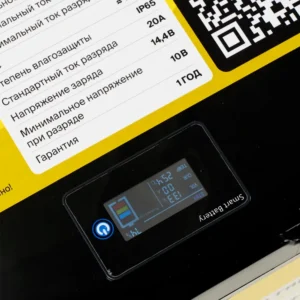
The battery capacity, measured in ampere-hours (Ah), determines how much electric charge it can store. The higher the capacity, the longer the electric vehicle can operate on a single charge. It is important to understand that capacity is just one of the parameters that determine battery efficiency.
 |
 |
 |
Influence of voltage and total power
Along with the capacity, the important factor is the voltage (V). The combination of capacity and voltage determines the total battery capacity in Watt-hours (Wh). The higher voltage allows you to get more power at the same capacity. This indicator is critical for selecting a battery for a specific electric vehicle.
Discharge depth: resistance to discharge and durability
The allowable discharge depth determines how much a battery can be discharged without compromising its durability and efficiency. Lead-acid batteries have a limited discharge depth, while lithium-iron-phosphate (LiFePO4) batteries are resistant to deep discharge, allowing almost the entire capacity to be used.
Energy density: an important factor of compactness
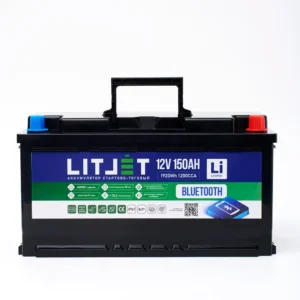
Energy density (energy per unit of weight or volume) is another important characteristic. High-density batteries such as LiFePO4 provide more energy in the same volume or weight compared to other types. This is critically important for electric vehicles, where the weight and dimensions of batteries play a crucial role.
 |
 |
 |
Advantages of LiFePO4 traction batteries
Lithium-iron-phosphate batteries have a lot of additional advantages.
More stable voltage
Lithium-iron-phosphate batteries (LiFePO4) demonstrate high voltage stability under significant loads. Even with the maximum output power, the voltage drop rarely exceeds 20%. This is critical for electric vehicles, as stable voltage helps to reduce the wear of the electric motor.
High current output
Unlike lead-acid batteries, LiFePO4 can continuously deliver high current (100-200 A) in traction mode. Lead-acid batteries are limited by a current of 0.1 C of their capacity. For example, a 65 Ah battery will not be able to produce more than 6A. LiFePO4 batteries are capable of producing power up to 2400 Wh from a single cell in normal operation, without overloading and significant heating.
Very fast charging speed
LiFePO4 batteries charge significantly faster than lead-acid batteries. The recommended charging current is approximately 0.5C, which allows you to charge the battery in 2-2.5 hours. Lead-acid batteries charge with significantly lower currents (0.05-0.1 C), which takes 10-20 hours. Fast charging is an important advantage for electric vehicles.
 |
 |
 |
Safety and thermal stability
LiFePO4 batteries are characterized by high thermal stability and safety. They practically do not heat up during operation, even during prolonged peak loads (the temperature usually does not exceed 45 °C).
Unlike lithium-ion batteries, LiFePO4 are not susceptible to spontaneous combustion and explosion in case of short circuit. This is critically important for ensuring the safety of electric vehicles.
Low self-discharge coefficient
Lead-acid batteries quickly lose their charge during storage. The average self-discharge is about 25% in 3 months, requiring regular recharging (approximately once every 6 months). Otherwise, the battery may fail completely in 1-2 years.
LiFePO4 batteries have a significantly lower self–discharge rate of about 1.5-3% per month. This means that additional charging is required only once every few years, which significantly saves time and resources during storage. In most cases, LiFePO4 batteries can be stored for many years without significant discharge.
They don't need to be serviced
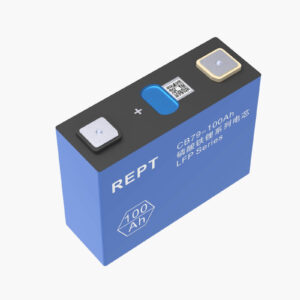
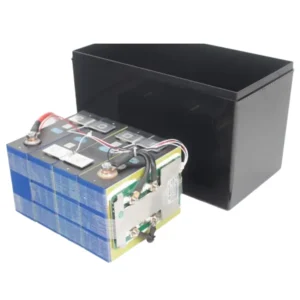
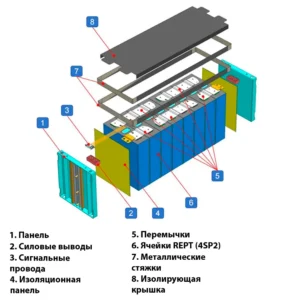
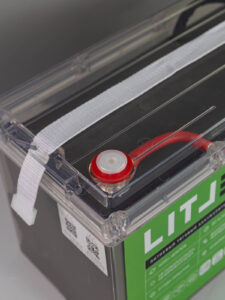
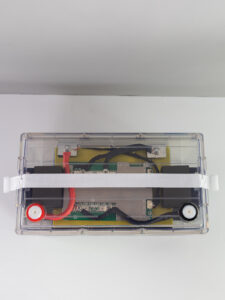
LiFePO4 batteries are maintenance-free, unlike lead-acid batteries. They are sealed, and a special BMS board is responsible for voltage balancing.
Lead-acid batteries need regular maintenance: monitoring the electrolyte density and refilling distilled water. Failure to do so leads to rapid wear and deterioration of performance. LiFePO4 does not require such actions, which saves time and money throughout its entire service life (up to 10 years with moderate use).
Environmental friendliness
LiFePO4 batteries are considered to be among the most environmentally friendly on the market.
- Their tightness eliminates the release of harmful substances during operation.
- Recycling of LiFePO4 cells and their reuse is already practiced in many countries, which minimizes environmental damage.
- LiFePO4 batteries have fewer potentially harmful components than lead-acid or lithium-ion batteries.
This is especially important due to the growing need for eco-friendly solutions for electric vehicles.
 |
 |
 |
 |
How to determine the required battery capacity for electric vehicles
To calculate the required capacity of a lithium-iron-phosphate battery for your needs, certain factors must be taken into account:
How much power does the equipment require
To select the battery system correctly, it is necessary to determine the total peak power of all devices connected to it. The technical documentation for each device indicates the rated and peak power (watts).
The sum of the peak capacities of the devices is the minimum required capacity of the battery system.
System voltage
For electric vehicles, the standard voltage usually ranges from 48 to 120 volts. If necessary, several batteries can be connected in series, summing up their voltage. When connected in parallel, the battery capacity is summed up, and the voltage remains unchanged.
Home backup power systems may require an inverter that converts the constant battery voltage to alternating (220 or 380 V). Choose an inverter with a compatible voltage.
For maximum efficiency when using an inverter, it is advisable to bring the battery assembly voltage as close as possible to the conversion voltage.
Required battery life and capacity calculation
To calculate the capacity, multiply the total power consumption by the battery life to determine the required capacity of the battery assembly in ampere-hours.
For example, if you need to power equipment with a capacity of 2000 Wh for 12 hours, you will need to assemble it at 24000 Wh. Dividing 24,000 Wh by the voltage (60 V), we get the required capacity of 400 Ah. Keep in mind that the actual power consumption is usually lower than the peak, which creates a reserve capacity.
Energy losses in inverters also need to be taken into account when calculating. Modern inverters have an efficiency of about 95%, therefore, about 5% of the energy will be spent on the operation of the inverter.
Using a wattmeter
It is recommended to use a wattmeter to accurately determine the consumption of the equipment. This will allow you to obtain accurate data on electricity consumption and refine calculations of the battery capacity.
Operating conditions
When choosing a rechargeable battery, it is also important to consider the following factors:
- Operating temperature: Different types of batteries react differently to low temperatures.
Lead-acid batteries work stably at low temperatures (less than 0°C), while lithium-ion batteries are less resistant to cold. LiFePO4 are more resistant to frost (up to -10°C or -20°C, depending on the model), but their capacity decreases at low temperatures.
For ultra-low temperatures (up to -40°C), there are LiFePO4 batteries with a built-in heating system, but this may limit long-term storage. In any case, the battery capacity decreases with decreasing temperature.
For example, a 100 Ah battery at 20 °C will produce 100 Ah, but at 0-5 °C it will produce about 85% (or even less) of the rated capacity.
- Charging speed: LiFePO4 batteries have a high charging speed (about 2 hours for a full charge).
- Number of charge-discharge cycles: LiFePO4 batteries are able to withstand a large number of charge-discharge cycles (more than 3,000), while lithium-ion and lead-acid batteries have lower values (respectively about 500 and 200 cycles). At the same time, the capacity of the LiFePO4 battery decreases by approximately 25% after 3000 cycles.
 |
 |
Capacity selection depending on the application
The required battery capacity largely depends on what exactly you plan to use the assembly for.
For cars
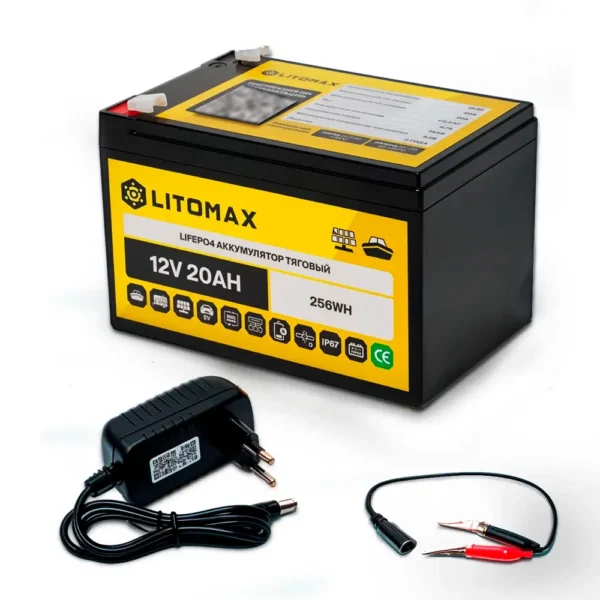
For electric vehicles, typical capacity values range from 30 to 100 kWh, at a voltage of 24 to 60 V.
Electric bicycles and electric pedals require significantly less capacity — from 2 to 10 kWh, depending on the required power reserve. Quick battery replacement is often provided.
Power supply of additional electronics
To power additional equipment (refrigerators, laptops, flashlights), batteries with a voltage from 12 to 24 V and a capacity of up to 100 Ah are required. This capacity is usually enough for several dozen hours of operation of electrical equipment.
For boats and speedboats
Relatively small batteries with a voltage of up to 60 V and a capacity of up to 10 kWh are used for boats and speedboats. This is enough for several hours of operation of the electric motor and auxiliary equipment. For small rubber boats, the capacity can be about 2 kWh.
For auxiliary devices such as echo sounder and navigator, a separate small battery with a capacity of 20-30 Wh is usually sufficient.
For motorhomes
In motorhomes, the total electricity consumption (refrigerator, heating, lighting) can reach 5 kW. To ensure battery life for a couple of days, it is recommended to use LiFePO4 batteries, taking into account the required battery life. If you plan to use electricity for heating, you must take into account the additional load (3 kW or more). from the heater.
When choosing the appropriate battery capacity, it is important to take into account the total energy consumption of the equipment, the required voltage and battery life. LiFePO4 batteries are often preferred for a wide range of applications due to the combination of characteristics, but an individual needs assessment is important for each case.